Live Exposure Defense: From CVE to Confirmed Exposure in 12 Hours – See more

IONIX vs Tenable

Tenable scans what it knows. IONIX finds what attackers reach.

Tenable extends a vulnerability scanner outward, so it starts from assets already in inventory. IONIX is external-first: it discovers the assets no scanner sees, maps your organizational entity model, and validates what is actually exploitable.

Organizations are aware of roughly 62% of their real external attack surface.

Feature comparison

IONIX vs Tenable at a glance

A side-by-side look at how the two platforms handle the work that matters most to exposure management teams.

Capability
Unknown-asset discoveryFinds external assets not in any scanner inventoryExternal-first, minimal seed~Scans requested domains
Organizational entity mappingMaps business units, dependencies, blast radiusConnective IntelligenceManual tags or CMDB
External exploitability validationActively tests whether an exposure is exploitableNon-intrusive simulation~Prioritization, not validation
Supply chain and subsidiary coverageDiscovers exposure through subsidiaries and dependenciesExposure by AssociationOwned assets only
Internal vulnerability managementAuthenticated scanning of known internal assetsExternal-first, complements VMNessus, Tenable.io
OT and ICS coverageVisibility into operational technology environmentsNative OT/ICS coverage
Agentless deploymentTime to value without agents or sensorsNo agents required~Agent-based VM heritage
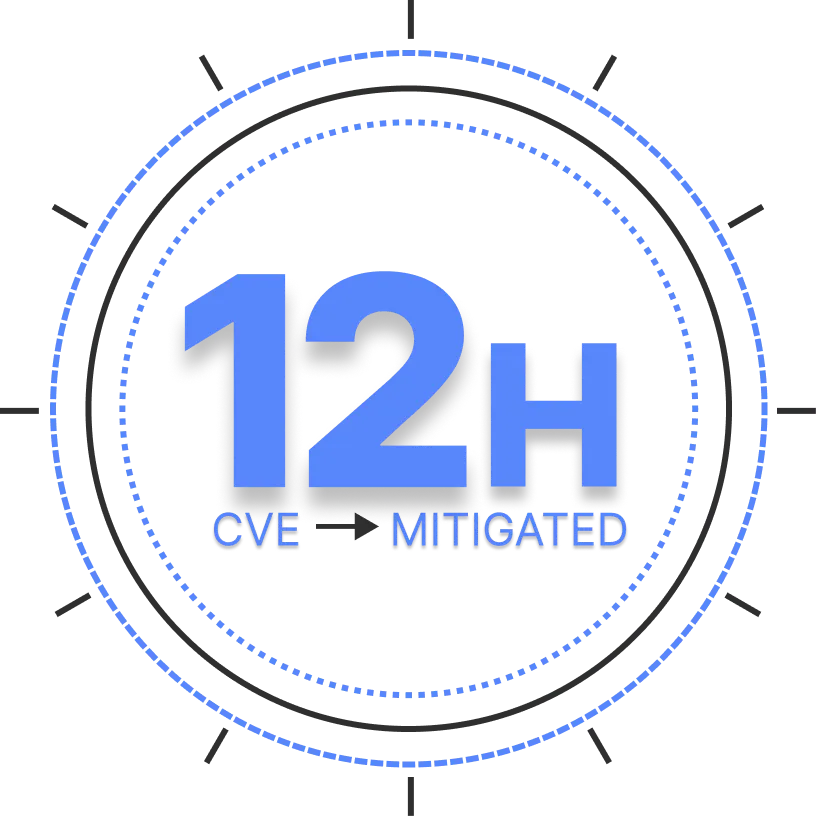
Zero-day mitigationCVE to validated, mitigated exposure in 12 hoursLive Exposure Defense, 12-hour SLAAdvisory only
Dangling asset and DNS takeover defenseClaims abandoned domains and cloud assetsActive ProtectionNot covered
See what attackers see

Find the assets your scanner inventory never lists

Tenable builds from the inside out. Its EASM module is an add-on to a vulnerability scanner, so it starts with assets that are already known and scans the domains you point it at. The result is blind spots: shadow infrastructure, unlinked IPs, and vendor-managed assets that never entered inventory stay invisible.

IONIX starts from the internet, the way an attacker does. Multi-factor discovery and ML attribution find and prove ownership of assets across owned, vendor-managed, and supply chain layers, including the ones no scanner sees. Most organizations are aware of only about 62% of their real external attack surface. IONIX closes that gap.

Validated, not discovered

Act on what is exploitable, not what is theoretical

Tenable ranks findings with AI prioritization, EPSS probability, and KEV flags. Without active validation, exploitability stays an estimate, and teams still triage long lists of theoretical risk. The noise is the cost: time spent on exposures an attacker could never reach.

IONIX runs non-intrusive exploit simulation from the outside, confirming whether each exposure is actually reachable and exploitable. You manage confirmed risk, not possibility. Customers see a 97% drop in false-positive alerts and a 90% reduction in MTTR for external exposures.

Exposure by association

Map the risk you inherited, not just what you built

Tenable does not lead with subsidiary or supply chain exposure, and its discovery does not stitch supply chain relationships across assets. The breaches that matter most, from SolarWinds to MOVEit, came through connected parties, not directly owned systems. That is the exposure a scanner-first tool leaves uncovered.

IONIX maps your organizational entity model first, then traces dependencies and blast radius across subsidiaries, acquisitions, and digital supply chain. You see the full attack surface you are connected to, including the assets you inherited through M&A. Attackers exploit new CVEs within hours, so inherited blind spots are not acceptable.

Mitigation, not management

Mitigate exposures, do not just report them

Tenable tells you what is vulnerable and ranks it. Closing the exposure is still your team's job, across patch cycles that run in weeks while attackers weaponize new CVEs within hours. Management without mitigation leaves the window open.

IONIX closes the loop. Live Exposure Defense puts a 12-hour SLA on the path from CVE publication to validated, exploitable exposure, then recommends specific WAF rules ready to deploy through Akamai, Cloudflare, AWS, Azure, and other supported vendors. Active Protection goes further, automatically claiming dangling domains and abandoned cloud assets before attackers reach them. Humans govern, agents operate.

See the external exposures your scanner will never find.

Book a 30-minute demo and watch IONIX map your real attack surface in minutes.