Live Exposure Defense: From CVE to Confirmed Exposure in 12 Hours – See more


IONIX vs watchTowr
watchTowr tests your perimeter the way an attacker would. IONIX does that across your entire organization, including subsidiaries and supply chain, then validates exploitability and closes it. Preemption is the promise. Mitigation is the point.
97% drop in false-positive alerts. 90% reduction in MTTR for external exposures.
A side-by-side look at how the two platforms handle the work that matters most to exposure management teams.
| Capability | ![]() |
|
|---|---|---|
| Discovery accuracyAttributes assets without flooding you with false positives | ✓Multi-factor ML attribution | ~Path evidence, false positives |
| Validated exploitabilityConfirms an exposure is reachable and exploitable | ✓Non-intrusive exploit simulation | ✕Builds PoCs, not applied in product |
| Supply chain and subsidiary exposureExposure through third parties and acquisitions | ✓Exposure by Association | ✕Not covered at scale |
| Risk scoring and prioritizationRanks by asset importance, EPSS, and blast radius | ✓Blast radius, business impact | ~Noisy, no grouping |
| Non-intrusive testingAssessment that will not disrupt operations | ✓Safe by design | ~Can use intrusive methods |
| Zero-day mitigationCVE to validated, mitigated exposure in 12 hours | ✓Live Exposure Defense, 12-hour SLA | ~Active Defense, detection-led |
| Asset takeover preventionClaims dangling and abandoned assets automatically | ✓Active Protection | ~Active Defense response |
| Enterprise scale and integrationsProven deployments, JIRA and ServiceNow workflows | ✓Enterprise-proven | ~Newer, smaller |
watchTowr calls its own approach preemptive and paints validation-based tools as reactive. That is a marketing line, not a technical distinction. Confirming whether an exposure is reachable and exploitable means attacking it the way an adversary would, which is offensive security, not a passive audit.
IONIX actively tests exploitability from the outside, the way an attacker would, before an attacker gets there. You confirm what breaks across your full external surface, then act. That is proactive as an operating model, not as a slogan.
watchTowr scans what is visible from the internet at a point in time and does not cover third-party or digital supply chain connections at scale. That leaves the path attackers actually take uncovered.
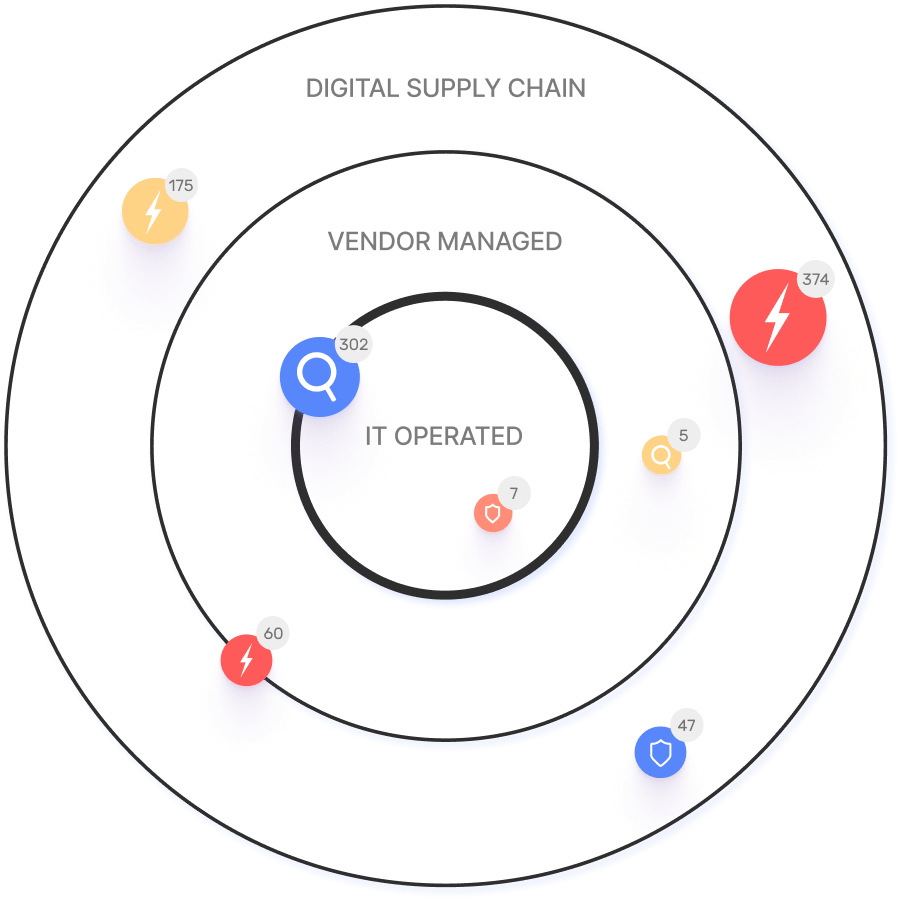
IONIX maps your organizational entity model first, then validates exposure across subsidiaries, acquisitions, and supply chain dependencies. The weakest link gets the same scrutiny as your primary domain.
watchTowr shows the discovery path as evidence, which can surface false positives, and develops proof-of-concept exploits in its research labs without applying them in the product. Severity comes from simulations that can be disruptive, with no grouping to cut the noise.
IONIX runs non-intrusive exploit simulation to confirm real exploitability, scores by asset importance, EPSS, and blast radius, and groups findings into action items by choke point and ownership. The result is a 97% drop in false positives.
watchTowr’s Active Defense delivers a protective response when a validated exposure is found, which is real progress. The model still centers on finding and flagging fast, and speed to detection is not the same as closing the exposure.
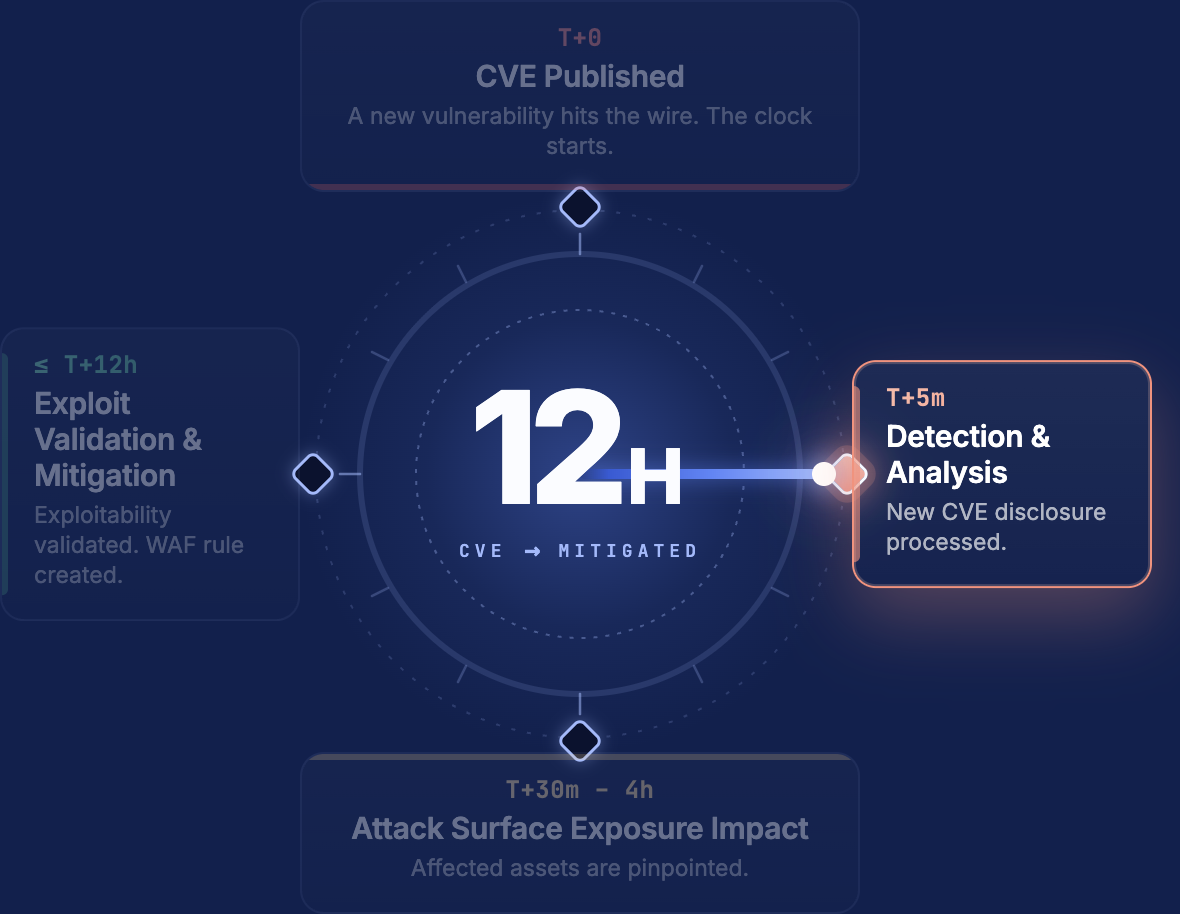
IONIX closes the loop. Live Exposure Defense puts a 12-hour SLA on the path from CVE publication to validated, exploitable exposure, then recommends specific WAF rules ready to deploy through Akamai, Cloudflare, AWS, Azure, and other supported vendors. Active Protection automatically claims dangling domains and abandoned cloud assets before attackers reach them. Humans govern, agents operate.
Book a 30-minute demo and watch IONIX map your real attack surface in minutes.