



Summary
CVE-2025-71318 is a critical authentication bypass vulnerability (CWE-306: Missing Authentication for Critical Function) affecting the Riello UPS NetMan 204 network management card. A remote, unauthenticated attacker can directly access administrative pages and privileged command endpoints over the network to disclose sensitive configuration data and remotely trigger physical UPS operations — including system shutdown — without supplying any credentials. The vulnerability carries a CVSS v3.1 base score of 9.8 (Critical).
Technical details
- Root cause: The NetMan 204 web interface fails to enforce authentication on administrative pages and command endpoints; requests to protected resources are served without any credential check.
- Trigger conditions: No authentication, no user interaction, and no special network position required — the attacker sends a direct HTTP/HTTPS request to the vulnerable endpoint.
- Attack vector: Network-accessible HTTP/HTTPS interface exposed by the NetMan 204 card; discoverable on the internet via passive scanning techniques.
- Information disclosure impact: Unauthenticated access to
administration.htmlandconfiguration.htmlexposes LDAP configuration and active user account details. - Command execution impact: Unauthenticated access to
administration-commands.htmlallows an attacker to invoke privileged UPS control commands includingshutdown,reboot,switch-on-bypass, andbattery test, enabling remote sabotage of physical power infrastructure. - Public PoC: A proof-of-concept exploit (Exploit-DB entry 52183) is publicly available, demonstrating unauthenticated remote command execution against the device.
Affected software
- Riello UPS NetMan 204 – all versions (no patched release is currently documented)
Severity
CVSS v3.1 Base Score: 9.8 (Critical)
Vector: CVSS:3.1/AV:N/AC:L/PR:N/UI:N/S:U/C:H/I:H/A:H
Mitigation and recommended actions
- No patch is currently available. Riello UPS has not published a firmware update addressing CVE-2025-71318. Monitor the official Riello UPS NetMan 204 downloads page for firmware updates.
- Immediate network mitigation: Place NetMan 204 devices behind a firewall and block all direct internet-facing access to the device’s HTTP/HTTPS management interface.
- Network segmentation: Isolate UPS management network cards on a dedicated out-of-band management VLAN with strict access controls, limiting connectivity to authorized management hosts only.
- Disable unnecessary services: If remote web management is not required, disable the HTTP/HTTPS interface on the card where the device firmware allows.
- Audit exposure: Review your network perimeter to identify any NetMan 204 interfaces reachable from untrusted networks and remediate immediately.
IONIX Status
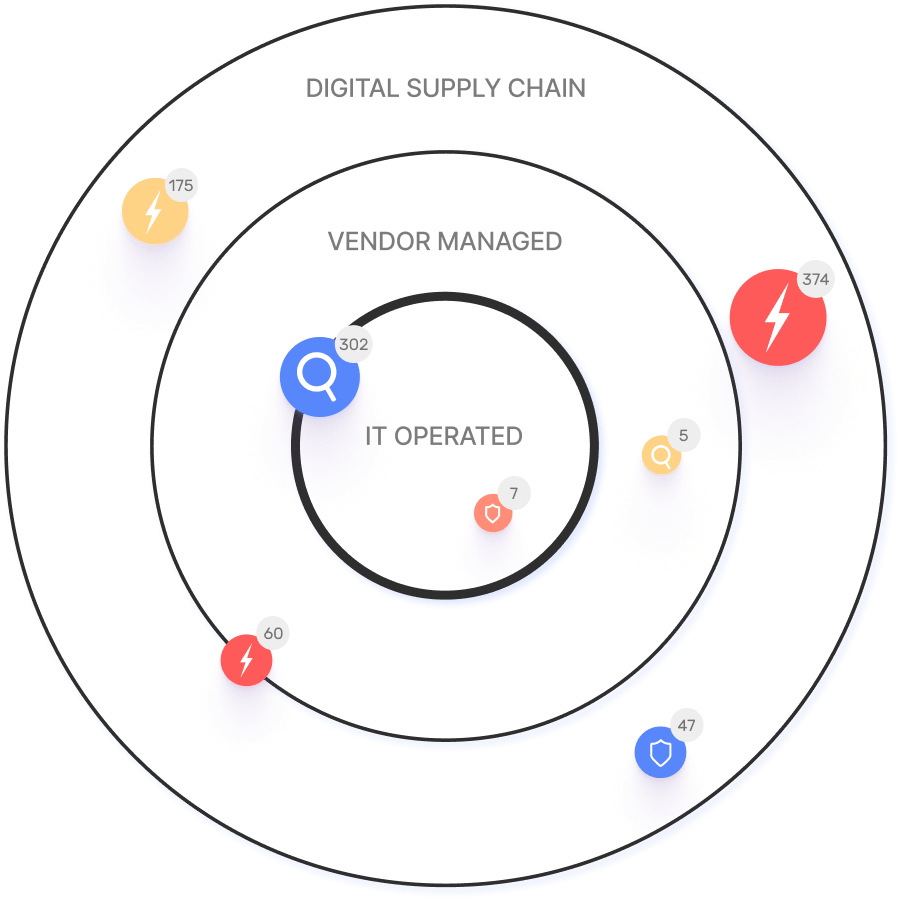
The IONIX research team is tracking ongoing exploitation attempts and recommends immediate patching. Potentially affected assets are outlined in this post.