


Summary
CVE-2026-13184 is a high-severity upload metadata integrity bypass vulnerability (CVSS 7.5) affecting Progress® Telerik® UI for ASP.NET AJAX versions 2010.1.309 through 2026.2.519. When Telerik.Upload.ConfigurationHashKey is absent and machineKey is not explicitly configured in the application, the RadAsyncUpload component’s integrity protection falls back to a predictable default HMAC key (CWE-321), allowing unauthenticated remote attackers to forge protected upload metadata and unlock further exploit chains. No authentication, privileges, or user interaction are required.
Technical details
- Root cause: The RadAsyncUpload handler implements an Encrypt-then-MAC scheme to protect upload metadata integrity via
Telerik.Upload.ConfigurationHashKey. When this key is absent and ASP.NET’smachineKeyis left on its default auto-generated setting, the handler falls back to a predictable hard-coded HMAC key (CWE-321) instead of a securely derived key, nullifying the integrity check. - Trigger conditions: Two conditions must both be true — (1)
Telerik.Upload.ConfigurationHashKeyis not explicitly set inweb.config, and (2)machineKeyis configured to auto-generate at runtime (the ASP.NET default) or is otherwise absent fromweb.config. - Attack vector: Network-accessible, unauthenticated HTTP/HTTPS requests to the RadAsyncUpload handler. No privileges and no user interaction are required (CVSS:3.1/AV:N/AC:L/PR:N/UI:N).
- Impact: An attacker who knows or can reproduce the predictable default key can craft forged upload metadata that passes the server-side HMAC integrity check. The vendor describes this as enabling "further exploit chains" — consistent with the historical pattern for this class of Telerik upload key exposure, where metadata forgery has served as a precursor to arbitrary file upload and remote code execution.
Affected software
- Progress® Telerik® UI for ASP.NET AJAX — versions 2010.1.309 through 2026.2.519 (all versions prior to 2026.2.708)
Severity
- CVSS v3.1 Base Score: 7.5 (High)
- Vector string:
CVSS:3.1/AV:N/AC:L/PR:N/UI:N/S:U/C:N/I:H/A:N - CWE: CWE-321 – Use of Hard-coded Cryptographic Key
Mitigation and recommended actions
- Immediate — apply the vendor patch: Upgrade to Telerik UI for ASP.NET AJAX v2026.2.708 (2026 Q2 SP1) or later, which removes the predictable fallback key behavior.
- Workaround option 1 (if patching is not immediately possible): Remove the
Telerik.AsyncUpload.ConfigurationEncryptionKeyentry fromweb.config. This forces the upload handler to use ASP.NET’sMachineKey.Unprotectrather than the vulnerable fallback path. - Workaround option 2: Explicitly configure a strong, unique machine key in IIS — disable the "automatically generate at runtime" option and use the IIS Machine Key interface to generate and apply a static key with HMACSHA256 validation. Recycle all application pools after making this change.
- Defense in depth: Regardless of patch status, organizations should verify that
Telerik.Upload.ConfigurationHashKeyis explicitly set to a strong, randomly generated value inweb.configon all Telerik AJAX deployments.
IONIX Status
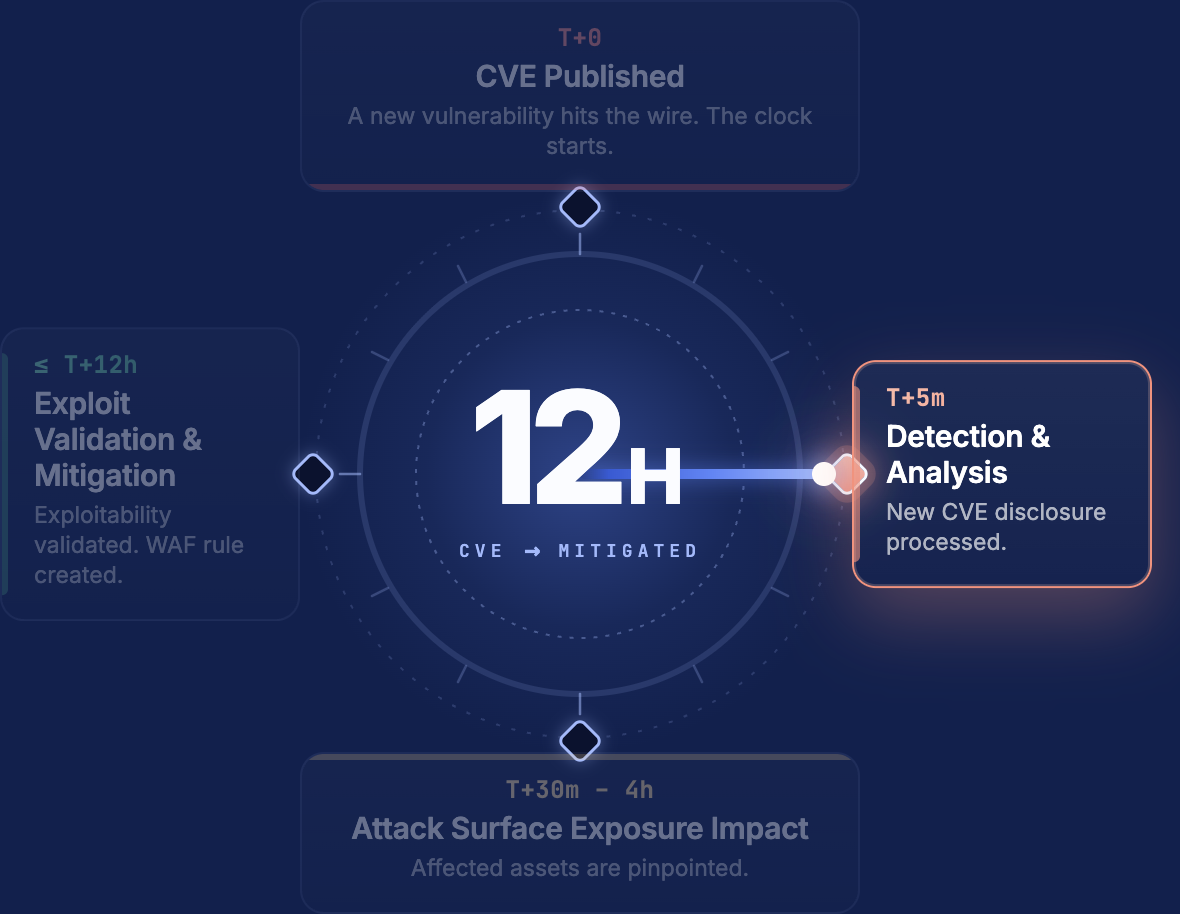
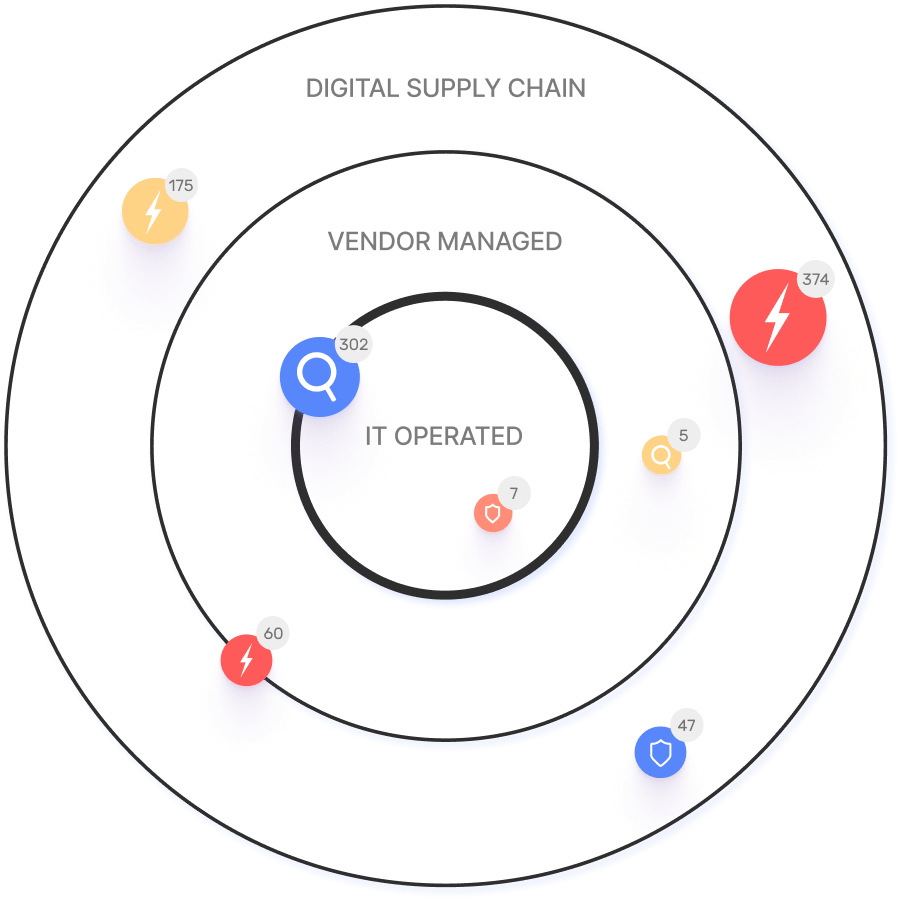
The IONIX research team is tracking ongoing exploitation attempts and recommends immediate patching. Potentially affected assets are outlined in this post.