

Summary
CVE-2026-48204 is a critical Improper Input Validation and Improper Access Control vulnerability (CVSS 9.8) in the camel-mongodb-gridfs component of Apache Camel. Because the component’s control headers use plain, non-prefixed names that are not filtered at the HTTP boundary, any unauthenticated remote attacker can inject those headers into an inbound HTTP request and take full control of GridFS operations, including reading, deleting, and enumerating stored files, as well as injecting NoSQL operators into MongoDB queries. All Apache Camel deployments running an HTTP-consumer-to-GridFS route in the default (no explicit operation) configuration are affected.
Technical details
-
Root cause: The
camel-mongodb-gridfsproducer reads the GridFS operation to execute from the Exchange headergridfs.operationwhenever the endpoint’soperationparameter is not set — which is the default. The underlying header constants (gridfs.operation,gridfs.objectid,gridfs.metadata,gridfs.chunksize,gridfs.fileid) do not carry theCamel/camelprefix. BecauseHttpHeaderFilterStrategyonly blocks headers in theCamelnamespace, these headers pass freely from an inbound HTTP request into the Exchange without any sanitisation. -
Trigger conditions: A route that bridges any HTTP consumer component (e.g.
platform-http,camel-servlet,camel-jetty,camel-undertow) into amongodb-gridfs:producer without an explicitoperationset on the endpoint — the default configuration. -
Attack vector: An unauthenticated remote attacker sends an HTTP request with crafted headers to the exposed Camel endpoint. No credentials or user interaction are required.
-
Impact:
-
Arbitrary file deletion — set
gridfs.operation: removetogether with an attacker-chosengridfs.objectidto delete any file in the GridFS bucket. -
Full file enumeration — use
gridfs.operation: listAllto retrieve a listing of every file in the bucket. -
Arbitrary file read / data exfiltration — use
gridfs.operation: findOneto read any file from the bucket, compromising confidentiality. -
NoSQL operator injection — supply a MongoDB query operator in the
gridfs.metadataheader, which is parsed as a raw MongoDB document.
-
Affected software
-
Apache Camel (
camel-mongodb-gridfs) 4.0.0 through 4.14.7 -
Apache Camel (
camel-mongodb-gridfs) 4.15.0 through 4.18.2 -
Apache Camel (
camel-mongodb-gridfs) 4.19.0 through 4.20.x
Severity
CVSS v3.1 Base Score: 9.8 (Critical) Vector: CVSS:3.1/AV:N/AC:L/PR:N/UI:N/S:U/C:H/I:H/A:H
Mitigation and recommended actions
-
Immediate — patch: Upgrade to one of the following fixed releases:
-
4.21.0 (latest general release — recommended)
-
4.14.8 (4.14.x LTS stream)
-
4.18.3 (4.18.x maintenance stream)
-
-
Post-upgrade: Any route logic that drives GridFS operations or metadata via header names must be updated to use the new Camel-prefixed constants:
CamelGridFsOperation,CamelGridFsObjectId,CamelGridFsMetadata,CamelGridFsChunkSize, andCamelGridFsFileIdin place of the legacygridfs.*names. -
If immediate patching is not feasible:
-
Set an explicit
operationparameter on everymongodb-gridfs:endpoint in your routes so that the operation is never derived from a request header. -
Strip the
gridfs.operation,gridfs.objectid,gridfs.metadata,gridfs.chunksize, andgridfs.fileidheaders from all untrusted inbound traffic before the request reaches the GridFS producer.
-
IONIX Status
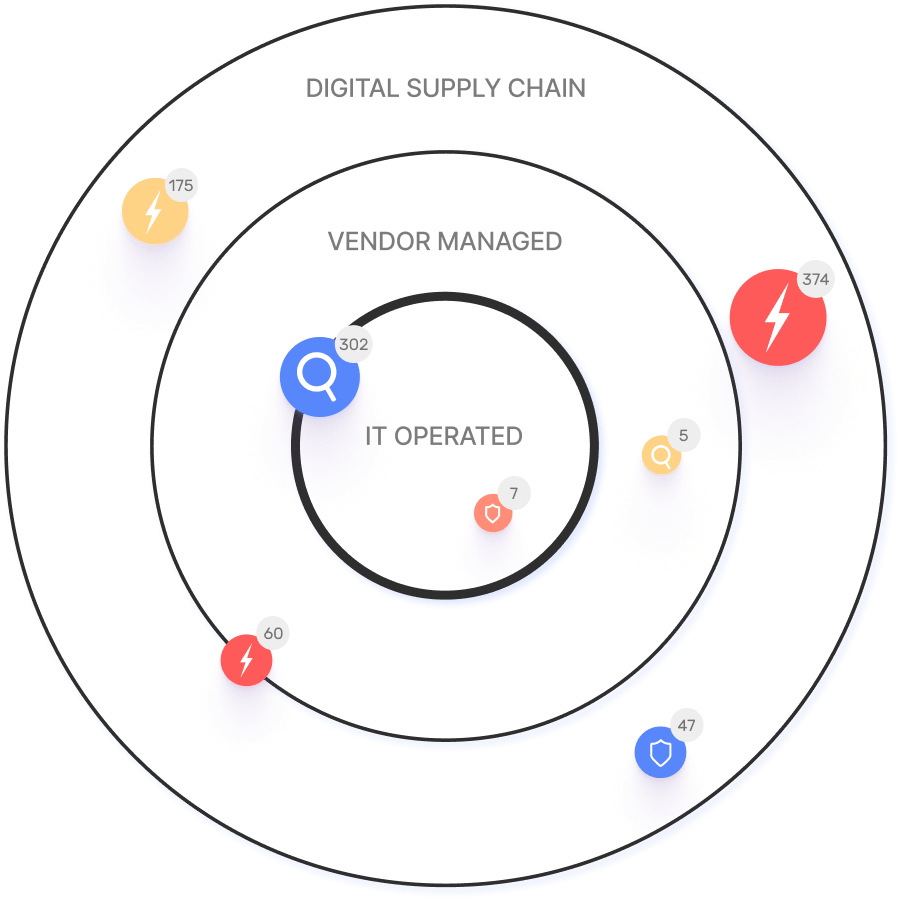
The IONIX research team is tracking ongoing exploitation attempts and recommends immediate patching. Potentially affected assets are outlined in this post.
WAF Mitigation ✨
Akamai App & API Protector
In Akamai Control Center (Security Configuration → your security policy → Custom Rules → Create a custom rule):
-
Rule logic: match ANY of the following (OR)
-
Add five conditions, each set to Request Header → header name → exists:
-
gridfs.operation -
gridfs.objectid -
gridfs.metadata -
gridfs.chunksize -
gridfs.fileid
-
You can also add this custom rule via Akamai API/CLI or the Akamai Custom Rule Builder Assistant:
{
  "name": "Apache-Camel-CVE-2026-48204-GridFS-header-block",
  "description": "Denies inbound requests smuggling internal Camel GridFS control headers (gridfs.operation, gridfs.objectid, gridfs.metadata, gridfs.chunksize, gridfs.fileid) into camel-mongodb-gridfs routes. CVE-2026-48204.",
  "structured": true,
  "operation": "OR",
  "conditions": [{
    "type": "requestHeaderMatch",
    "positiveMatch": true,
    "name": ["gridfs.operation", "gridfs.objectid", "gridfs.metadata", "gridfs.chunksize", "gridfs.fileid"],
    "nameWildcard": false,
    "value": ["*"],
    "valueWildcard": true,
    "valueCase": false
  }],
  "ruleActivated": true,
  "stagingOnly": false,
  "samplingRate": 100,
  "tag": ["CVE-2026-48204"]
}
Deploy to Akamai App & API Protector
Cloudflare WAF
Under Security → WAF → Custom rules → Create rule → "Edit expression":
any(lower(http.request.headers.names[*])[*] in {"gridfs.operation" "gridfs.objectid" "gridfs.metadata" "gridfs.chunksize" "gridfs.fileid"})
⚠️ Note: WAF mitigation rules are in preview and not yet generally available.