



Summary
CVE-2026-58157 is a high-severity information disclosure vulnerability in Apache Traffic Server (ATS), an open-source reverse proxy and caching solution deployed at the internet edge. The flaw stems from improper reuse of server sessions and tunnels, which can expose data from one client connection to another. With a CVSS v3.1 base score of 8.7 (HIGH) and a Scope:Changed rating reflecting cross-boundary impact, this vulnerability poses a significant risk to any organization running an affected ATS instance.
Technical details
- Root cause: Apache Traffic Server improperly reuses server-side sessions and tunnels across distinct client connections (CWE-200: Exposure of Sensitive Information to an Unauthorized Actor).
- Trigger conditions: The flaw can be triggered remotely over the network with no authentication and no user interaction required; Attack Complexity is rated HIGH, consistent with timing-sensitive conditions such as concurrent connection handling under load.
- Attack vector: Network-accessible (AV:N); ATS is an internet-edge proxy, making its HTTP/HTTPS listener the direct attack surface.
- Impact: A remote unauthenticated attacker may receive HTTP response data, session tokens, cookies, or other sensitive payload content belonging to a different client routed through the same ATS instance. The Scope:Changed (S:C) metric reflects that the confidentiality and integrity impact extends beyond the vulnerable component itself to the data of arbitrary clients. There is no availability impact.
Affected software
- Apache Traffic Server 8.0.0 through 8.1.9
- Apache Traffic Server 9.0.0 through 9.2.14
- Apache Traffic Server 10.0.0 through 10.1.3
Severity
- CVSS v3.1 Base Score: 8.7 (HIGH)
- Vector String:
CVSS:3.1/AV:N/AC:H/PR:N/UI:N/S:C/C:H/I:H/A:N
Mitigation and recommended actions
- Immediate action: Upgrade to Apache Traffic Server 9.2.15 or 10.1.4, which contain the official fix released by the Apache Software Foundation.
- If immediate upgrade is not possible: Restrict internet-facing access to the ATS instance at the network perimeter (firewall or load-balancer ACLs) to reduce exposure until the patch can be applied. Monitor proxy logs for anomalous cross-session data patterns.
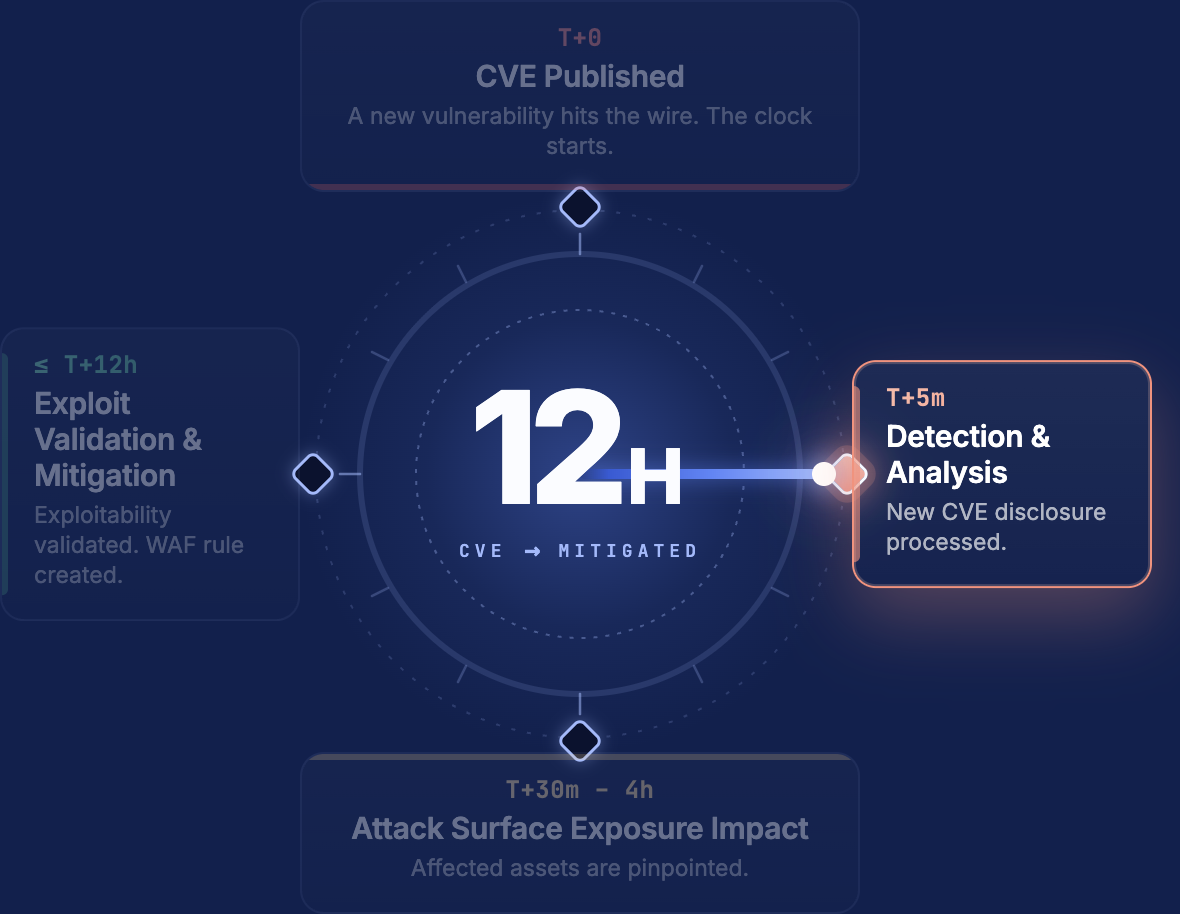
IONIX Status
The IONIX research team is tracking ongoing exploitation attempts and recommends immediate patching. Potentially affected assets are outlined in this post.