

Summary
CVE-2026-58455 is a critical unauthenticated OS command injection vulnerability in Dockwatch (by Notifiarr), a self-hosted Docker container management web UI, affecting all versions through 0.6.567. By chaining an authentication bypass with unsanitized shell command execution, remote attackers can inject and run arbitrary OS commands with no credentials or user interaction required. In the standard Dockwatch deployment — where the Docker socket is mounted — successful exploitation escapes the container and results in full host-level compromise.
Technical details
- Root cause: Two weaknesses are exploited in sequence: (1) a missing
exit;statement after an authentication redirect inloader.php(CWE-698: Execution After Redirect), which allows request processing to continue past the authentication gate; and (2) unsanitized user input passed directly toshell_exec()inajax/compose.php(CWE-78: OS Command Injection). - Trigger conditions: An attacker first abuses the incomplete authentication check in
loader.phpto seed the required session flag, then sends a crafted HTTP POST request toajax/compose.phpwith a maliciouscomposePathparameter in thecomposePullaction to inject arbitrary shell commands. - Attack vector: Fully network-accessible, requiring no authentication and no user interaction.
- Impact: Arbitrary OS command execution on the underlying host. Because Dockwatch is standardly deployed with the Docker socket mounted, exploitation escapes the container and yields full host compromise, with complete confidentiality, integrity, and availability impact.
Affected software
- Dockwatch (Notifiarr) — all versions through 0.6.567
Severity
- CVSS v4.0 Base Score: 9.2 (Critical)
- Vector:
CVSS:4.0/AV:N/AC:L/AT:P/PR:N/UI:N/VC:H/VI:H/VA:H/SC:N/SI:N/SA:N - CVSS v3.1 Base Score: 9.8 (Critical)
- Vector:
CVSS:3.1/AV:N/AC:L/PR:N/UI:N/S:U/C:H/I:H/A:H
Mitigation and recommended actions
- No patched release is currently available. A fix has been submitted via GitHub Pull Request #135 as of July 2, 2026, but has not yet been merged or released. The proposed patch adds the missing
exit;call inloader.phpand wraps thecomposePathparameter inescapeshellarg()across multiple compose actions inajax/compose.php. - Immediate actions:
- Remove internet exposure now — place the Dockwatch web UI behind a VPN or firewall and do not leave it publicly accessible until a patched version is released and applied.
- If internet-facing access cannot be immediately restricted, consider taking the Dockwatch instance offline temporarily.
- Monitor the Notifiarr/dockwatch repository for a patched release and apply it immediately upon availability.
IONIX Status
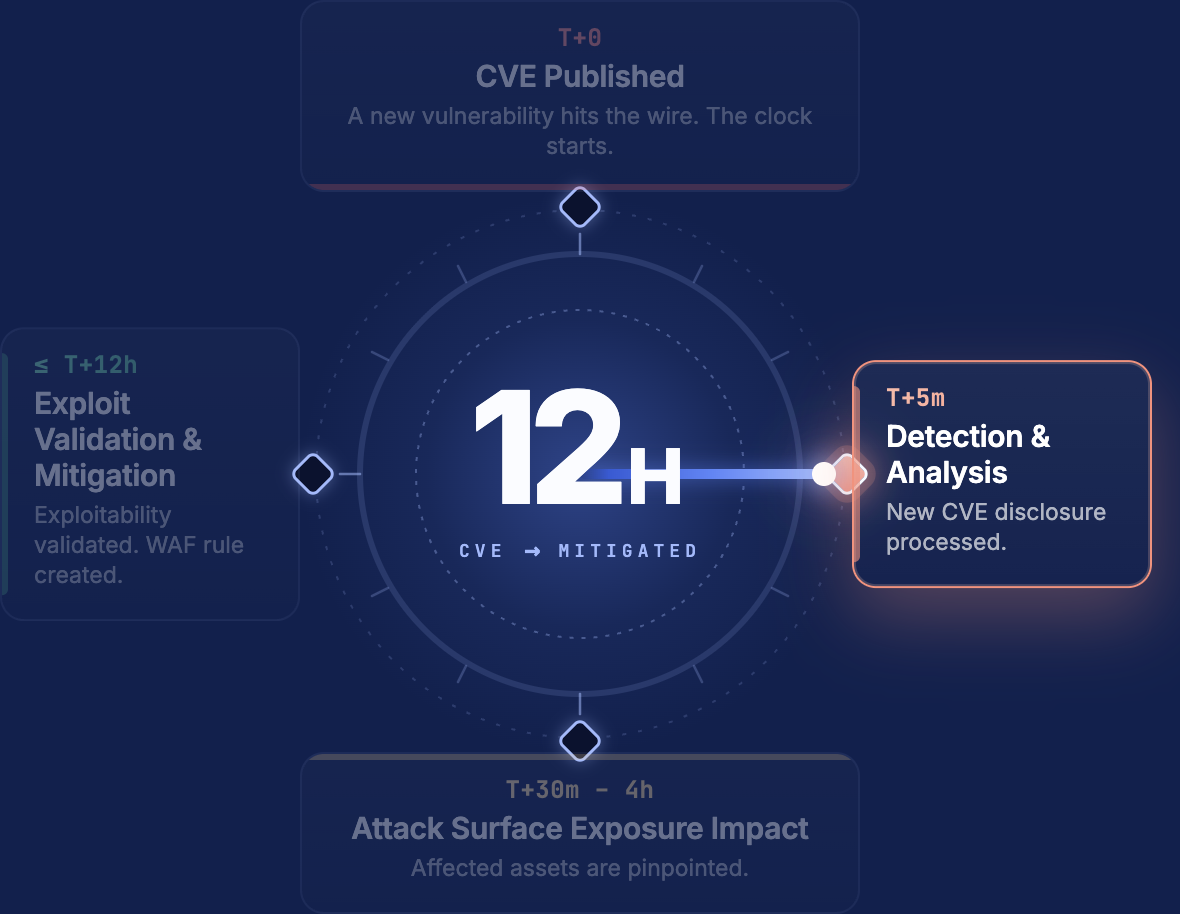
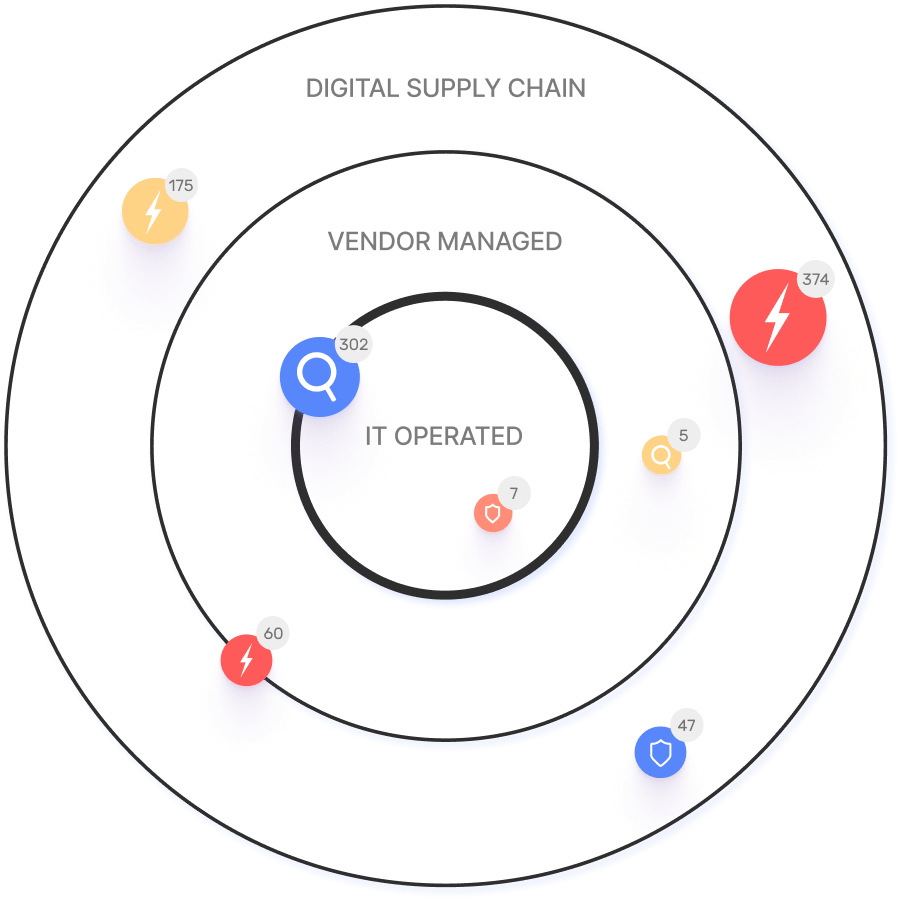
The IONIX research team is tracking ongoing exploitation attempts and recommends immediate patching. Potentially affected assets are outlined in this post.