


Summary
CVE-2026-59083 is a critical-severity (CVSS 9.1) Improper Handling of URL Encoding vulnerability in Apache Tomcat’s RewriteValve component, publicly disclosed on July 14, 2026. The flaw allows unauthenticated, remote attackers to bypass security constraints in affected configurations by sending specially crafted HTTP requests that exploit incorrect URL decoding behavior in the RewriteValve. The vulnerability spans four major version branches of Apache Tomcat, covering the vast majority of active deployments.
Technical details
- Root cause: The RewriteValve incorrectly decodes the
+character in rewritten URIs as a single space. Because Tomcat’s security constraint evaluation and the RewriteValve resolve the URI differently, an attacker can craft a request with+-encoded characters that passes through the RewriteValve but matches a path that security constraints were intended to protect — effectively deceiving the access control layer. - Trigger conditions: The vulnerability is exploitable on instances where the RewriteValve (
org.apache.catalina.valves.rewrite.RewriteValve) is configured in the server. Apache notes this affects "some configurations." - Attack vector: Remote, unauthenticated. An attacker sends a crafted HTTP request — no credentials, no user interaction, and no local access required.
- Impact: Successful exploitation results in security constraint bypass, potentially exposing protected endpoints, administrative interfaces, or sensitive application functionality to unauthenticated access. CVSS impact scores are Confidentiality: HIGH and Integrity: HIGH.
- CWE: CWE-177 – Improper Handling of URL Encoding (Hex Encoding).
- No public proof-of-concept exploit was identified at time of publication.
Affected software
- Apache Tomcat 11.0.0-M1 through 11.0.23
- Apache Tomcat 10.1.0-M1 through 10.1.56
- Apache Tomcat 9.0.0.M1 through 9.0.119
- Apache Tomcat 8.5.0 through 8.5.100
- Other versions that have reached end of support may also be affected.
Severity
CVSS v3.1 Base Score: 9.1 (Critical)
Vector: CVSS:3.1/AV:N/AC:L/PR:N/UI:N/S:U/C:H/I:H/A:N
Mitigation and recommended actions
- Immediate patch: Upgrade to one of the following fixed releases:
- Apache Tomcat 11.0.24 or later
- Apache Tomcat 10.1.57 or later
- Apache Tomcat 9.0.120 or later
- Apache Tomcat 8.5.x users: No patch has been issued for the 8.5.x branch. Organizations running 8.5.x should treat this branch as end of life and migrate to a supported version branch (9.0.120+, 10.1.57+, or 11.0.24+) immediately.
- Configuration-level mitigation: If upgrading is not immediately feasible, review and audit all RewriteValve rules in use. Where feasible, temporarily disabling the RewriteValve removes the attack surface — though this may impact application functionality and should be tested carefully.
- Network segmentation: Ensure that Tomcat management interfaces and sensitive application paths are not unnecessarily exposed to the public internet.
IONIX Status
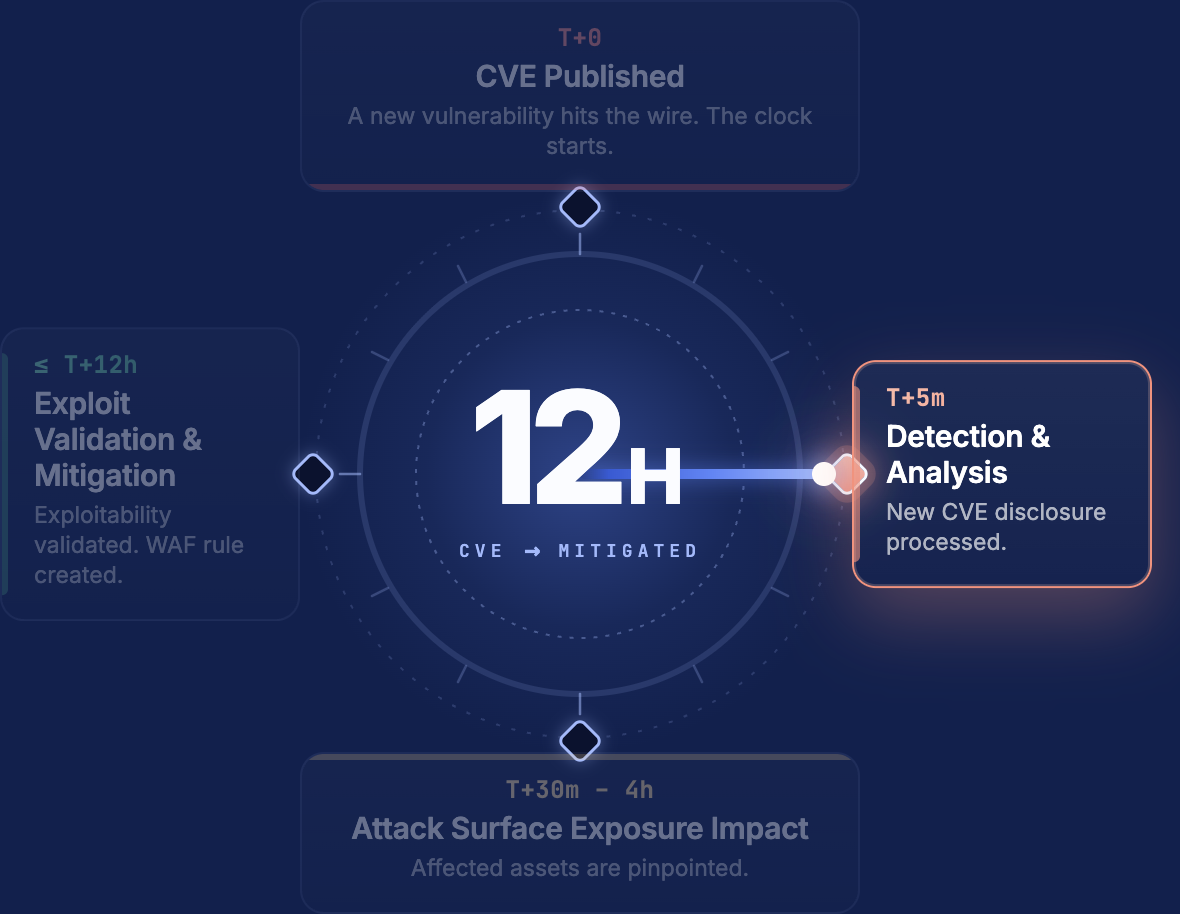
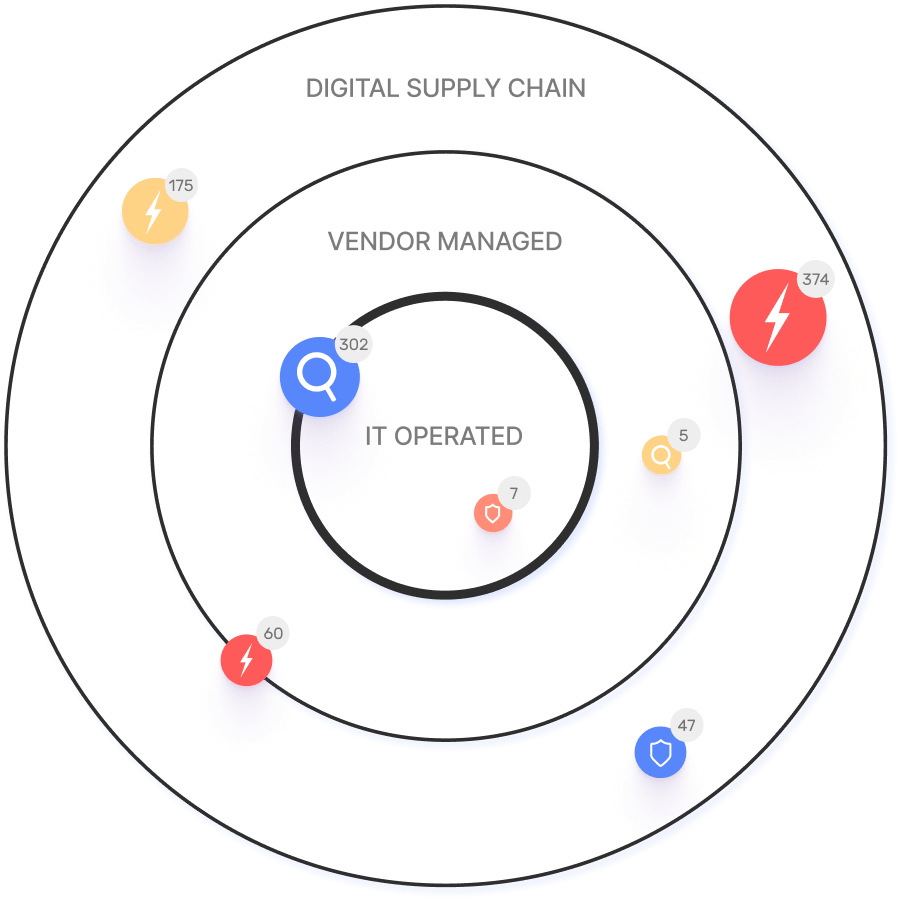
The IONIX research team is tracking ongoing exploitation attempts and recommends immediate patching. Potentially affected assets are outlined in this post.