


Summary
CVE-2026-60208 is a critical unauthenticated vulnerability in the Core component of Oracle WebLogic Server, published on July 21, 2026 as part of Oracle’s July 2026 Critical Patch Update. An unauthenticated attacker with only network access via HTTP can exploit this flaw to gain unauthorized read access to all WebLogic Server accessible data and to create, delete, or modify critical data on the server. With a CVSS v3.1 base score of 9.1, this vulnerability requires no privileges and no user interaction to exploit, making any internet-exposed WebLogic instance an immediate high-priority target.
Technical details
- Attack vector: Exploitable remotely over a network via HTTP — no adjacent network access or local presence required.
- Authentication: No credentials or prior authentication of any kind are required; the vulnerability is fully pre-authentication.
- Attack complexity: Low — no special conditions, race conditions, or target-specific configuration are needed to trigger exploitation.
- Confidentiality impact: High — successful exploitation can result in unauthorized access to critical data or complete access to all Oracle WebLogic Server accessible data.
- Integrity impact: High — successful exploitation can result in unauthorized creation, deletion, or modification of critical data or all Oracle WebLogic Server accessible data.
- Availability impact: None — the vulnerability does not directly impact service availability.
- Affected component: Oracle WebLogic Server Core.
Affected software
- Oracle WebLogic Server 12.2.1.4.0
- Oracle WebLogic Server 14.1.1.0.0
- Oracle WebLogic Server 14.1.2.0.0
- Oracle WebLogic Server 15.1.1.0.0
Severity
| Metric | Value |
|—|—|
| CVSS v3.1 Base Score | 9.1 (Critical) |
| Vector String | CVSS:3.1/AV:N/AC:L/PR:N/UI:N/S:U/C:H/I:H/A:N |
Mitigation and recommended actions
- Immediate action: Apply the Oracle Critical Patch Update (CPU) for July 2026, which contains the official fix for all affected versions. Refer to the Oracle CPU July 2026 advisory for patch availability and installation instructions specific to each affected version.
- If immediate patching is not feasible: Restrict network access to WebLogic administrative ports (typically 7001/7002) and the WebLogic administration console (
/console) via firewall rules or network segmentation, ensuring only trusted hosts can reach the server. Disable internet exposure of WebLogic management interfaces until patching is complete. - Inventory: Identify all internet-facing Oracle WebLogic Server deployments in your environment — including those on non-standard ports — and prioritize patching for any instance reachable from untrusted networks.
IONIX Status
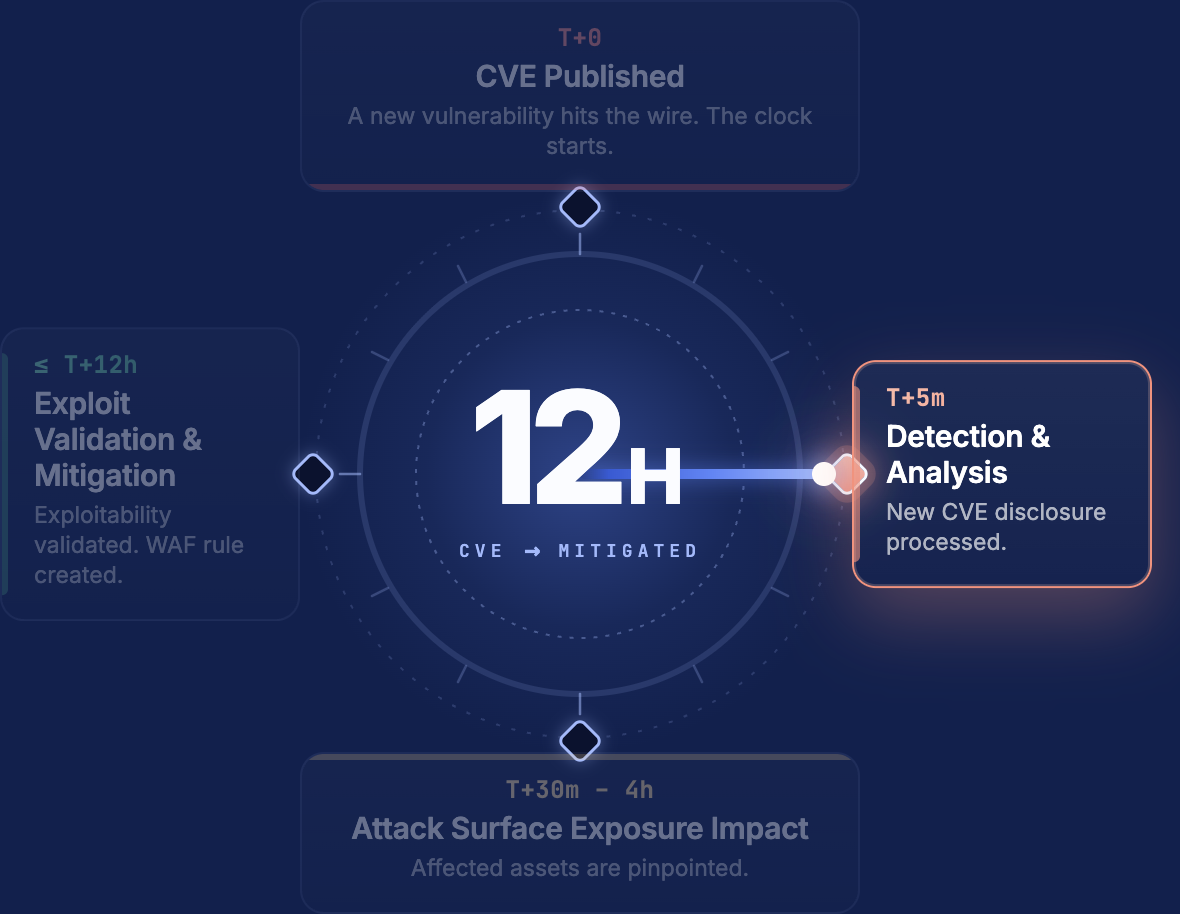
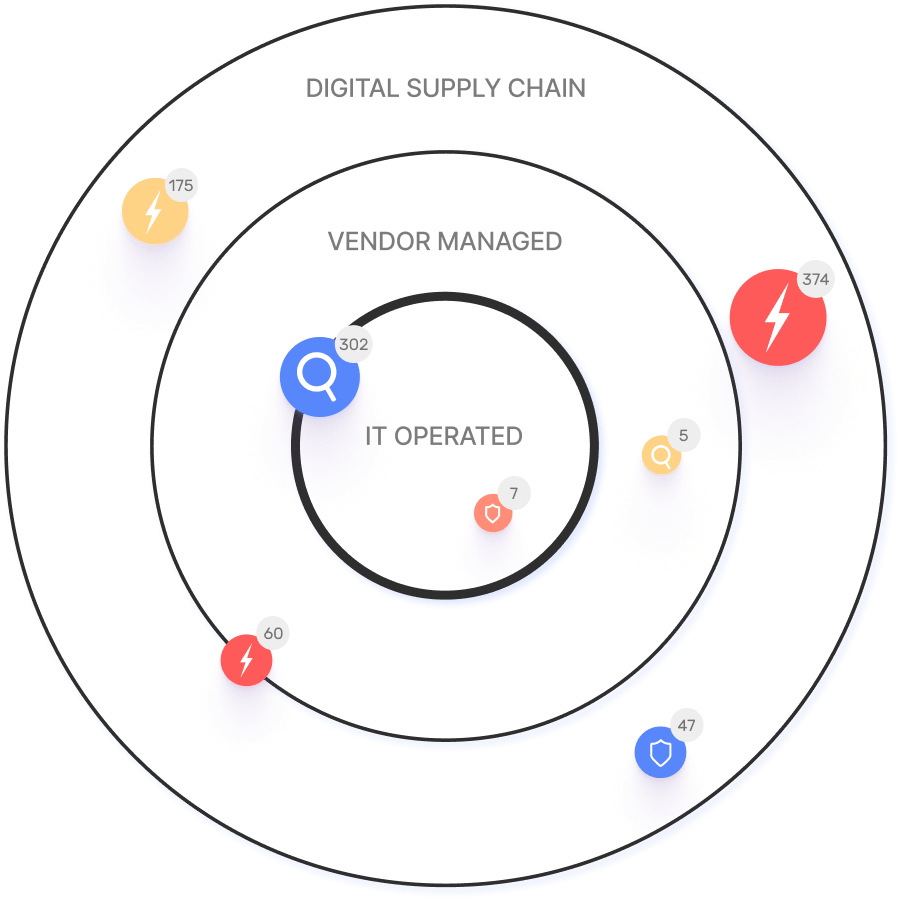
The IONIX research team is tracking ongoing exploitation attempts and recommends immediate patching. Potentially affected assets are outlined in this post.