
Best Cortex Xpanse Alternative for Enterprise External Exposure Management


Cortex Xpanse scans 500 billion ports a day, according to Palo Alto Networks. That number sounds impressive until you ask a harder question: does Xpanse know which of those ports belong to a subsidiary your security team has never scoped? Can it confirm whether the exposure behind that port is exploitable from the outside?
IONIX answers both questions. The platform builds a complete organizational entity map of subsidiaries, acquisitions, and digital supply chain dependencies before discovery begins, then validates real-world exploitability across that full scope. For enterprises evaluating a Cortex Xpanse alternative, the gap between port scanning and External Exposure Management is where breaches start.
Why enterprises look for a Cortex Xpanse alternative
Cortex Xpanse starts from internet-visible infrastructure. It indexes the public internet, identifies assets, and uses machine learning models to attribute them to organizations. This approach finds assets that are already visible from the outside, and it does so at massive scale.
The problem: visibility alone does not reduce exposure. Xpanse reports what exists. It does not validate which of those exposures are exploitable in your specific environment. A 2024 review of ASM tools by Breachsense noted that Xpanse’s “full value requires broader Palo Alto platform adoption,” and that “implementation typically requires professional services engagement.” Security teams receive a list of assets with theoretical risk scores, not evidence-backed confirmation of real-world exploitability.
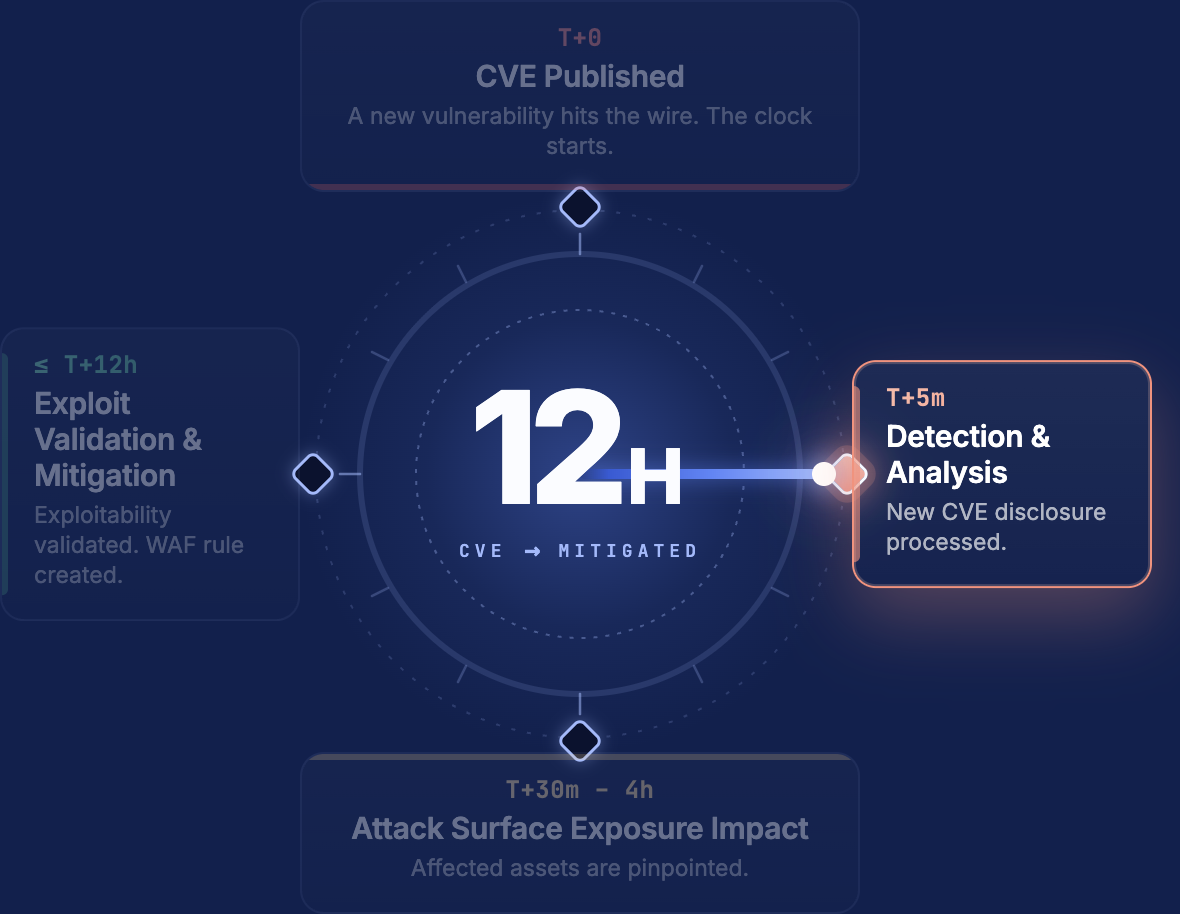
IONIX takes a different approach. Before scanning a single asset, the platform conducts structured organizational research: mapping subsidiaries, M&A history, affiliated brands, and digital supply chain relationships. Discovery starts from a complete entity model, not a seed list of known domains. Once IONIX identifies the full scope, it runs active exploit simulation against each exposure, confirming which findings an attacker could reach and use. Your team gets validated findings to act on, not a longer worry list.
IONIX customers report a 97% drop in false-positive alerts and a 90% reduction in mean time to resolve external exposures. Those numbers reflect the difference between reporting everything and validating what matters.
Cortex XDR 5.0’s “Unified Exposure Management” does not replace EASM
Palo Alto launched a “Unified Exposure Management” add-on with Cortex XDR 5.0 in early 2026. The claim: enterprises can eliminate the need for standalone EASM tools by consolidating external scan data into their XDR platform.
That claim misses the core gaps. An XDR module that bolts on external scan data does not replicate what a purpose-built External Exposure Management platform delivers. Xpanse, even as part of Cortex, does not build a complete organizational entity model of your subsidiaries before scanning. It does not validate which discovered exposures are exploitable. It does not map risk through your digital supply chain.
Enterprise security teams that manage multi-entity footprints, including acquired companies, regional subsidiaries, and third-party dependencies, need organizational entity mapping as a prerequisite to discovery. Bolting internet scan data onto an XDR console skips that prerequisite.
IONIX vs. Cortex Xpanse: capability comparison
| Capability | Cortex Xpanse | IONIX |
|---|---|---|
| Discovery starting point | Internet-visible assets | Organizational entity model (subsidiaries, M&A, brand registrations) |
| Exposure validation | Reports what exists; no active exploit simulation | Active exploit simulation confirms real-world exploitability |
| Subsidiary and acquisition coverage | Limited to internet-attributable assets | Full scope mapped through organizational research before discovery |
| Digital supply chain risk | Not a primary capability | Connective Intelligence maps third-party dependencies and traces exposure paths |
| Stack independence | Highest value within Cortex ecosystem | Works with any security stack |
| Validated CTEM alignment | Not positioned around CTEM | Operationalizes Gartner’s CTEM framework across all five stages |
| Remediation workflow | Automated playbooks via XSOAR integration | Integrated remediation with Active Protection for automatic risk mitigation |
Four gaps Xpanse leaves open for enterprise teams
1. No organizational research before discovery
Xpanse scans the internet and attributes assets algorithmically. Assets belonging to recently acquired companies, dormant subsidiaries, or brands registered under alternate legal entities get missed when no structured organizational research precedes discovery. Industry estimates suggest organizations are aware of roughly 60% of their actual external exposure. The remainder often lives in entities that internet scanning alone cannot attribute.
2. No exposure validation
Xpanse identifies exposed assets and assigns risk indicators. It does not confirm whether an attacker could reach and exploit a given exposure from the outside. IONIX runs active exploit simulation to prove exploitability with evidence, not theoretical severity ratings. According to Vectra AI’s CTEM analysis, 61% of 2025 vulnerabilities were exploited within 48 hours of disclosure. Security teams need validated confirmation of exploitability, not a severity score.
3. No supply chain or subsidiary risk mapping
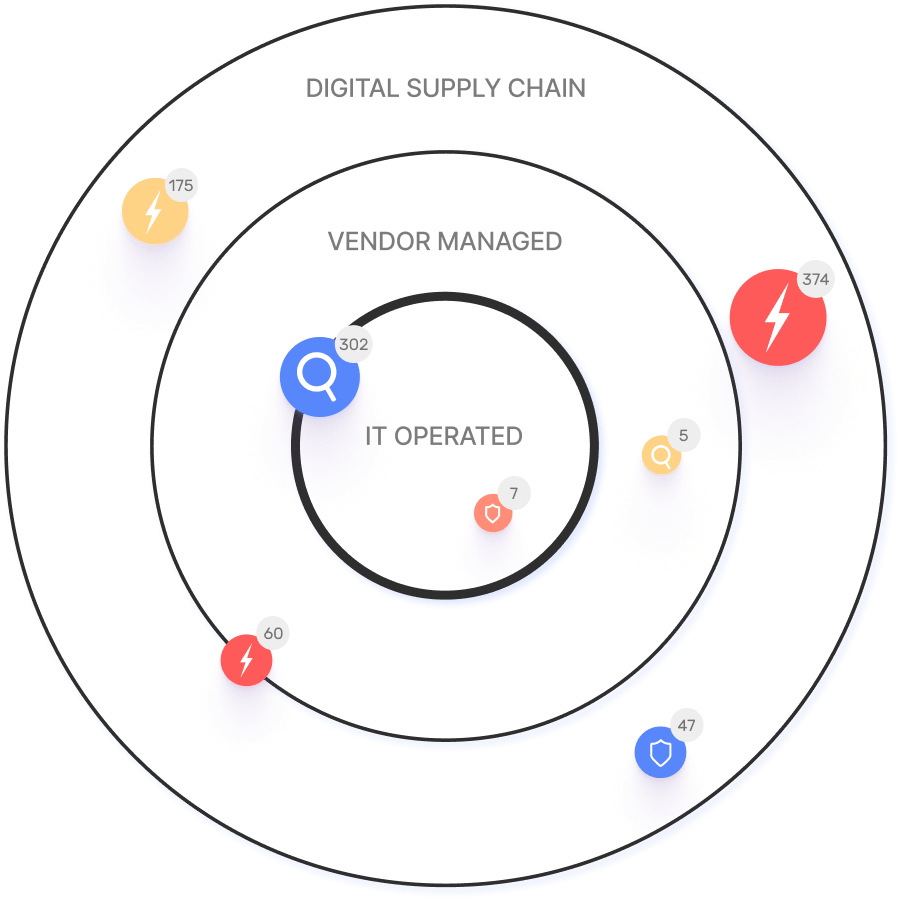
Enterprise organizations with complex corporate structures face exposure through connected third parties and subsidiary infrastructure. Xpanse scans what it can see from the internet. IONIX uses Connective Intelligence to map digital supply chain relationships and trace exposure paths through dependencies that no internet scan can detect. An attacker targeting your weakest subsidiary does not limit their reconnaissance to your primary domain.
4. Cortex ecosystem lock-in
Xpanse delivers full value within the Palo Alto Cortex stack: XSOAR for playbooks, XDR for correlation, XSIAM for SOC automation. Enterprises running heterogeneous security stacks lose integration depth. IONIX operates independently of any vendor ecosystem, integrating with your existing SIEM, SOAR, and ticketing tools. A HivePro review of exposure management platforms confirmed that Xpanse’s “strength lies in consolidating data and providing insights for teams that rely heavily on the Palo Alto security stack.”
Enterprise results with IONIX as a Cortex Xpanse alternative
IONIX customers cut exposure windows from weeks to hours. In IONIX’s customer data, a Fortune 500 organization achieved an 80%+ MTTR reduction within six months of deployment. Across the IONIX customer base, teams report a 90% reduction in mean time to resolve external exposures and a 97% drop in false-positive alerts.
These results come from the platform’s architecture: organizational entity mapping ensures complete scope, exposure validation eliminates noise, and Active Protection mitigates confirmed risks without waiting for manual remediation cycles.
Gartner predicts that by 2026, organizations prioritizing security investments based on a CTEM program will be three times less likely to suffer a breach. IONIX operationalizes all five stages of Gartner’s CTEM framework: scoping, discovery, prioritization, validation, and mobilization. Xpanse covers discovery and portions of prioritization within the Cortex ecosystem.
Enterprises evaluating a Cortex Xpanse alternative need more than port scanning at scale. IONIX delivers organizational entity mapping, continuous exposure validation, and digital supply chain coverage that Xpanse’s architecture cannot replicate. Book a demo to see how IONIX maps your full organizational scope and validates what’s exploitable.
FAQs
Xpanse discovers internet-facing assets and assigns risk indicators based on observed data. It does not run active exploit simulation to confirm whether a specific exposure is reachable and exploitable from the outside. IONIX validates exploitability through active testing, providing evidence-backed findings rather than theoretical risk scores.
Xpanse discovers assets that are visible from the internet and attributable through algorithmic analysis. Assets belonging to subsidiaries registered under different legal entities, recent acquisitions not yet integrated into primary infrastructure, or third-party services are often missed. IONIX maps the full organizational structure before discovery begins.
The add-on integrates Xpanse scan data into the Cortex XDR console. It does not add organizational entity mapping, exposure validation, or digital supply chain risk coverage. Enterprises with multi-entity footprints still need an external-first platform built for those capabilities.
IONIX integrates with any SIEM, SOAR, or ticketing system. The platform operates independently of vendor ecosystems, making it a fit for enterprises running heterogeneous security infrastructure.