

Best External Attack Surface Management Platforms for Enterprise Security Teams in 2026


An attacker targeting your organization doesn’t start with a port scan. They start by figuring out what you own: subsidiaries acquired last quarter, SaaS platforms your marketing team provisioned, DNS records left behind after a cloud migration. The best EASM platforms in 2026 work the same way.
Enterprise security teams evaluating EASM platforms this year face a market that has shifted. Gartner folded standalone EASM into its Exposure Assessment Platforms category in the 2025 Magic Quadrant. The EASM market, valued at $545 million in 2022, is projected to reach $930 million by 2026 according to Outpost24’s EASM Buyer’s Guide. The tools that survive this consolidation go beyond discovery into exposure validation, organizational scope, and supply chain coverage.
This evaluation covers six platforms across the five criteria enterprise buyers should prioritize.
Five evaluation criteria for enterprise EASM
Before comparing platforms, align your evaluation around these dimensions. They separate tools that produce asset lists from tools that drive remediation.
| Criterion | What to evaluate | Why it matters |
|---|---|---|
| Organizational scope | Does the platform map subsidiaries, acquisitions, and affiliated brands before scanning? | Attackers target the weakest entity you own. A tool that starts from a seed list misses everything outside that list. |
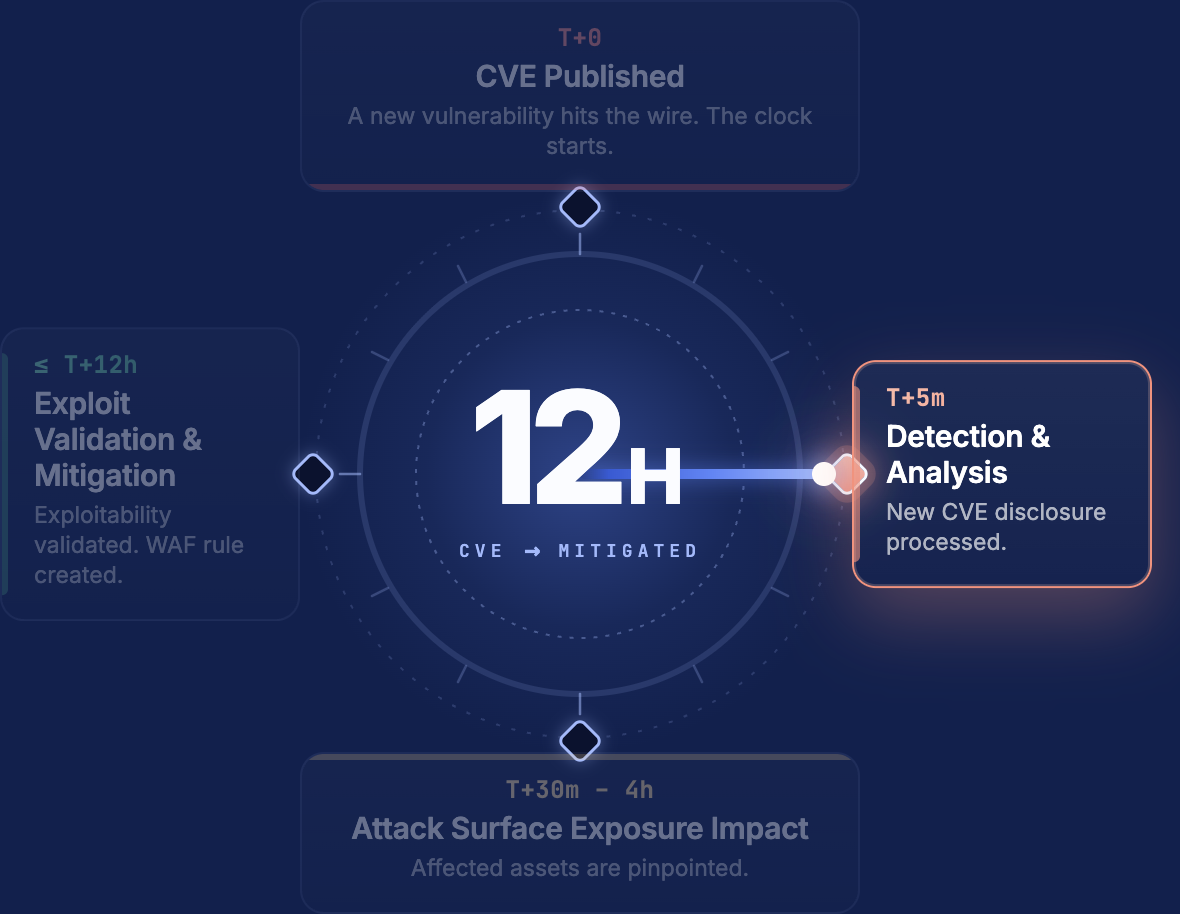
| Validation depth | Does it confirm real-world exploitability, or report CVEs? | Nearly 40,000 CVEs were disclosed in 2024. Listing them adds noise. Confirming which ones are reachable and exploitable from the outside drives action. |
| Supply chain coverage | Does it trace digital dependencies and third-party risk? | Your CDN provider, your DNS host, your embedded analytics script: each one is an attack vector. |
| Remediation integration | Does it route findings to the right team with fix guidance? | A platform that discovers exposures but can’t mobilize fixes leaves gaps open. |
| CTEM alignment | Does it operationalize Gartner’s Continuous Threat Exposure Management framework? | Gartner predicts organizations running CTEM programs will be 3x less likely to suffer a breach by 2026. CTEM is the operational model serious buyers are adopting. |
IONIX: best for validated exposure management across complex organizations
IONIX takes an external-first, attacker-centric approach to External Exposure Management. Before scanning a single asset, the platform builds a complete organizational entity map: subsidiaries, acquisitions, affiliated brands, and digital supply chain dependencies. Discovery starts from this verified entity model, not a seed list.
Discovery methodology: IONIX uses multi-factor discovery including DNS analysis, certificate mapping, and metadata inspection to map internet-facing assets across cloud environments, shadow IT, and infrastructure that other tools miss. The platform’s Connective Intelligence technology maps relationships between assets and organizations using machine learning.
Validation capability: IONIX validates real-world exploitability through active, non-intrusive security testing on production environments. The platform asks attacker-centric questions: Can this asset be reached from the internet? Does it require authentication? Is it being targeted in the wild? This exposure validation approach delivers a 97% drop in false-positive alerts and cuts exposure windows from weeks to hours, based on IONIX customer outcomes.
Supply chain coverage: IONIX traces risk through third, fourth, and Nth-party digital supply chain connections. At E.ON, IONIX’s ability to continuously discover internet-facing assets and their web of external dependencies was a core requirement. One Fortune 500 organization achieved an 80% MTTR reduction within six months of deployment.
CTEM alignment: IONIX operationalizes Gartner’s Validated CTEM framework across all five stages: scoping through organizational entity mapping, discovery through continuous external scanning, prioritization through evidence-backed exploitability testing, validation through active protection, and mobilization through remediation workflows.
Ideal buyer: Enterprise security teams with multi-entity external footprints, subsidiaries, acquired companies, and extended digital supply chains. Attack surface owners and vulnerability management leaders who need evidence of real exploitability, not longer worry lists.
Book a demo to see how IONIX maps your full organizational exposure.
CyCognito: strong on analyst recognition, limited on organizational scope
CyCognito positions itself as an External Exposure Management platform and has earned Gartner recognition and a longer market track record than several competitors.
Discovery methodology: CyCognito’s “zero-input” seedless discovery uses algorithmic asset attribution. The platform infers ownership from internet signals rather than building a structured organizational entity model. This works for assets directly attributable through public records. It misses assets belonging to recently acquired entities, holding companies, or subsidiaries with separate domain registrations that the algorithm hasn’t connected.
Validation capability: CyCognito validates exposures on directly-owned infrastructure. Ask whether that validation extends to subsidiaries and third-party dependencies. Ask whether discovery scope includes entities not yet attributed algorithmically.
Supply chain coverage: Not a primary CyCognito capability. The platform focuses on directly-owned internet-facing assets.
CTEM alignment: CyCognito has not articulated a CTEM operationalization framework.
Ideal buyer: Mid-to-large enterprises with relatively flat organizational structures and limited subsidiary complexity. Security teams that value seedless deployment and have Gartner-aligned procurement processes.
Palo Alto Cortex Xpanse: scale within the Cortex ecosystem
Cortex Xpanse is an ASM module within Palo Alto’s Cortex platform. In early 2026, Cortex XDR 5.0 added a “Unified Exposure Management” feature that claims to eliminate the need for standalone EASM tools.
Discovery methodology: Xpanse scans at massive port scale (Palo Alto cites 500 billion ports scanned daily). The platform starts from internet-visible assets and identifies exposures through broad internet scanning. Palo Alto does not conduct structured organizational research to build a complete entity model before discovery. Assets belonging to unknown subsidiaries or recent acquisitions get missed.
Validation capability: Palo Alto does not lead with validation in Xpanse messaging. Xpanse reports what exists on the internet. It does not confirm which discovered exposures are reachable and exploitable from an attacker’s perspective.
Supply chain coverage: Not a primary Xpanse capability.
CTEM alignment: Limited. Xpanse operates as a module within the broader Cortex platform rather than as a standalone CTEM-aligned operational framework.
Ideal buyer: Enterprises already running Palo Alto Cortex that want consolidated ASM data within their existing stack. The value proposition is strongest for organizations that prioritize scan breadth and vendor consolidation over validation depth and organizational scope.
On the “no more standalone EASM” claim: An XDR add-on that bolts external scan data onto an endpoint platform does not replace an external-first platform built on organizational research, active exploitability validation, and supply chain mapping. Port volume is not the constraint most security teams face. Knowing which of those ports belong to a subsidiary you didn’t scope, and whether the exposure behind them is exploitable, is the constraint.
Censys: internet intelligence for research-oriented buyers
Censys scans the entire internet and provides a passive data layer used by researchers, GRC teams, and other vendors.
Discovery methodology: Censys maintains one of the broadest internet scan datasets available. The platform scans globally and indexes services, certificates, and hosts. It cannot derive which assets belong to a specific organization without manual scoping.
Validation capability: Censys provides passive scanning data. It does not validate exploitability. The platform shows you what exists on the internet; it does not tell you what is exploitable in your environment.
Supply chain coverage: Censys does not trace organizational supply chain dependencies. Its data is internet-wide, not organization-scoped.
CTEM alignment: None. Censys is a data layer, not an operational platform.
Ideal buyer: GRC teams, security researchers, and data-oriented buyers who need internet-scale visibility for benchmarking, threat research, or peer comparison. Censys is not an EASM replacement for teams that need to act on findings.
Tenable: unified exposure from a vulnerability management heritage
Tenable One was named a Leader in Gartner’s first Magic Quadrant for Exposure Assessment Platforms (November 2025). The platform evolved from Tenable’s vulnerability management roots into a broader exposure assessment offering.
Discovery methodology: Tenable One combines internal vulnerability scanning with external attack surface data. The platform benefits from Tenable’s extensive plugin library and scanner network. External discovery relies on internet scanning rather than organizational entity mapping.
Validation capability: Tenable prioritizes findings through risk scoring that combines CVSS, exploit prediction, and asset context. The platform does not perform active external exploitability validation in the way purpose-built EASM tools do.
Supply chain coverage: Limited. Tenable’s heritage is in vulnerability management for directly owned infrastructure. Digital supply chain tracing is not a core capability.
CTEM alignment: Tenable markets Tenable One as an exposure management platform aligned with CTEM principles. The platform covers internal and external exposure but does not start from an external-first, attacker-centric perspective.
Ideal buyer: Organizations with mature vulnerability management programs that want to extend into exposure management without replacing their existing Tenable deployment. VM leaders adding external coverage to an established internal scanning program.
Rapid7: integrated exposure within a SecOps platform
Rapid7’s InsightConnect and exposure management capabilities provide external attack surface data within a broader SecOps platform.
Discovery methodology: Rapid7 discovers external assets through internet scanning and integrates findings with its internal vulnerability data.
Validation capability: Findings are prioritized through Rapid7’s risk scoring model. Active exploitability validation from an external perspective is not a primary focus.
Supply chain and organizational scope: Limited. Rapid7’s strength is in correlating external exposure data with internal security operations context.
Ideal buyer: Security teams already using Rapid7’s InsightVM or InsightConnect who want external surface data integrated into their existing operational workflows.
Platform comparison at a glance
| Capability | IONIX | CyCognito | Cortex Xpanse | Censys | Tenable One | Rapid7 |
|---|---|---|---|---|---|---|
| Organizational entity mapping | Full (subsidiaries, M&A, brands) | Algorithmic inference | No | No | No | No |
| Active exploitability validation | Yes, continuous | Directly-owned assets only | No | No (passive data) | Risk scoring, no active testing | Risk scoring |
| Digital supply chain coverage | Yes (Nth-party) | Limited | Limited | No | Limited | Limited |
| CTEM operationalization | Validated CTEM | No | No | No | Partial | No |
| Stack independence | Any security stack | Standalone | Best within Cortex | Data layer | Tenable ecosystem | Rapid7 ecosystem |
| Deployment model | External-first, agentless | Seedless, agentless | Platform module | SaaS data platform | Agent + scanner + SaaS | Agent + SaaS |
How to choose: match the platform to your exposure problem
Your choice depends on what exposure problem you need to solve.
If your organization has subsidiaries, acquisitions, or a complex digital supply chain, start with IONIX. Organizational entity mapping and validated exposure across multi-entity structures is the gap where breaches start. In our experience working with enterprise customers, most organizations see only a fraction of their actual external exposure before deploying a complete entity model.
If your procurement process requires Gartner-recognized vendors with seedless deployment, evaluate CyCognito. Accept the trade-off on organizational scope and supply chain coverage.
If your security stack is built on Palo Alto Cortex and vendor consolidation is the priority, Xpanse delivers scan data within that ecosystem. Adding port data to an XDR platform is not the same as validating which exposures are exploitable.
If you need internet-scale data for research or benchmarking, Censys is the reference dataset. It is not an EASM platform.
If you have an established Tenable deployment and want to extend into exposure management, Tenable One adds external coverage without a stack overhaul. The trade-off is external-first depth.
Enterprise EASM in 2026 is no longer about finding assets. Every platform on this list discovers internet-facing infrastructure. The differentiator is what happens after discovery: does the platform map your full organizational scope, validate which exposures are exploitable, and trace risk through your digital supply chain? Those three capabilities separate reporting tools from operational security platforms. IONIX delivers all three.
FAQs
EASM discovers internet-facing assets and identifies vulnerabilities from the outside in. Exposure management is the broader operational discipline that includes discovery, validation of real-world exploitability, prioritization, and remediation across the full organizational scope. IONIX operates as an External Exposure Management platform: EASM capabilities plus exposure validation, supply chain coverage, and CTEM alignment.
Standalone discovery without validation produces a longer worry list. Enterprise teams need platforms that confirm which exposures are exploitable and map organizational risk across subsidiaries and digital supply chain dependencies. The category has evolved from standalone EASM into validated External Exposure Management.
Gartner’s Continuous Threat Exposure Management framework defines a five-stage cycle: scoping, discovery, prioritization, validation, and mobilization. EASM covers the discovery stage. Platforms that operationalize the full CTEM cycle, including exposure validation and remediation mobilization, deliver more security value than discovery-only tools.
The average time-to-exploit held at roughly 5.4 days in 2024 according to Fortinet’s 2025 Global Threat Landscape Report. Some vulnerabilities, like CVE-2024-21887 in Ivanti products, were exploited within six days of disclosure. Continuous exposure validation catches exploitable assets before attackers reach them.