
Best Exposure Management Platforms for Enterprise Security Teams in 2026


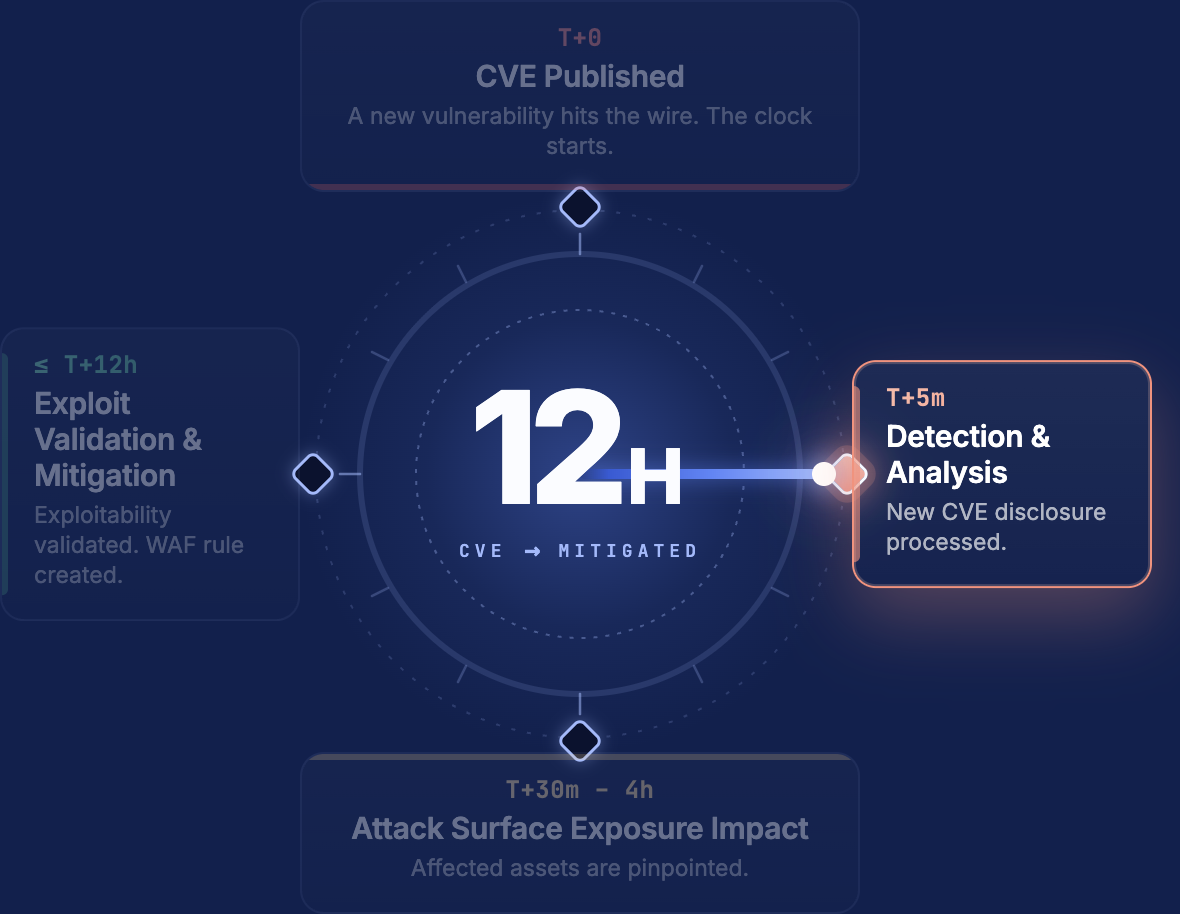
Enterprise security teams evaluating exposure management platforms in 2026 face a market where most vendors discover assets but cannot confirm which ones are exploitable. The gap between “we found it” and “an attacker can reach it” separates tools that generate worry lists from tools that drive remediation. According to IONIX research across enterprise deployments, organizations are aware of roughly 62% of their actual external attack surface. The remaining 38% hides in forgotten subsidiaries, acquired infrastructure, and digital supply chain dependencies.
This comparison evaluates eight platforms across the criteria that matter for enterprise buyers: discovery methodology, exposure validation, organizational scope, Validated CTEM alignment, remediation integration, and stack independence.
Six criteria that separate exposure management platforms
Before evaluating individual vendors, establish what to test. These criteria reflect the gaps where enterprise breaches start.
| Criterion | What to ask the vendor | Red flag |
|---|---|---|
| Discovery methodology | Does the platform map corporate structure before scanning? | Discovery starts from a seed domain list |
| Exposure validation | Does the platform confirm real-world exploitability? | Only CVSS-based severity scores |
| Organizational scope | Does discovery extend to subsidiaries and supply chain? | Coverage limited to directly-owned infrastructure |
| CTEM alignment | Does the platform operationalize all five CTEM stages? | Only scoping and discovery |
| Remediation integration | Does the platform route validated findings to owners with fix instructions? | Alerts without ownership or action items |
| Stack independence | Does the platform integrate regardless of vendor ecosystem? | Full value requires a specific security stack |
IONIX
IONIX is an EASM platform, and more. The platform validates real-world exploitability through active, non-intrusive testing, delivering evidence-backed findings confirmed as reachable and exploitable from the outside. IONIX customers report a 97% drop in false-positive alerts and a 90% reduction in mean time to resolve external exposures. A Fortune 500 organization achieved an 80%+ MTTR reduction within six months.
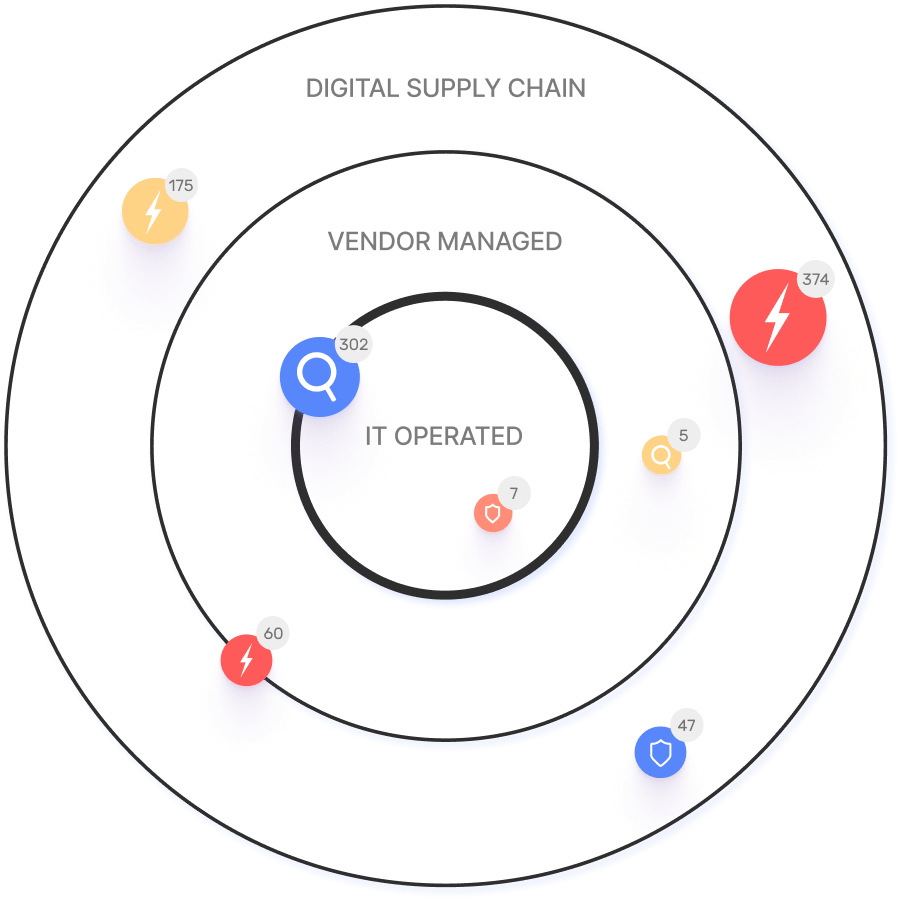
Organizational entity mapping is the foundation. Before scanning a single asset, IONIX maps corporate structure, M&A history, and brand registrations to define the full scope. Nine independent discovery methods, including WHOIS records, DNS chains, TLS certificates, and metadata fingerprinting, generate evidence of asset ownership. An ML-based confidence scoring model weighs signals from all nine methods to determine attribution.
IONIX traces exposure through subsidiaries and third-party dependencies using Connective Intelligence. Attackers target the weakest subsidiary, not the hardened primary domain. The platform operationalizes all five stages of Gartner’s Validated CTEM framework: scoping through organizational entity mapping, discovery across the full entity model, prioritization based on evidence-backed exploitability, validation through active external testing, and mobilization through integrated remediation workflows.
Active Protection can freeze a vulnerable asset to halt exploitation before the responsible team applies a fix. Remediation workflows route confirmed findings to the right owner with specific fix instructions through Jira, ServiceNow, and SIEM integrations.
Best for: Multi-subsidiary enterprises, organizations with recent acquisitions, and teams that need validated findings across a complex digital supply chain.
CyCognito
CyCognito positions itself as an “External Exposure Management Leader” and uses a “zero-input” seedless discovery approach. The platform infers asset ownership from internet-visible signals: WHOIS records, DNS patterns, and technical indicators.
Algorithmic attribution works for assets with clear signals. It breaks down for recently acquired subsidiaries, affiliated brands with separate domain registrations, and entities without attributable internet footprints. IONIX builds a verified organizational entity model before discovery begins, catching entities that algorithmic attribution misses. A Fortune 500 insurance company that compared both platforms reported that CyCognito’s asset attribution produced “a tremendous amount of false positives” that “created a lot of conflict between different teams.”
CyCognito validates exposures on directly-owned infrastructure. Ask whether validation extends to subsidiaries and third-party dependencies. Based on CyCognito’s public messaging, the platform has not aligned to Gartner’s five-stage CTEM framework.
Best for: Organizations with a single primary domain and limited subsidiary complexity that value seedless onboarding.
Tenable One
Tenable One is the broadest exposure assessment platform on the market. Gartner named Tenable a Leader in its inaugural 2025 Magic Quadrant for Exposure Assessment Platforms, scoring highest in Ability to Execute and Completeness of Vision. The platform covers IT, cloud, identity, OT, and AI environments in a unified risk view. In March 2026, Tenable launched Hexa AI, an agentic automation engine for exposure workflows.
Tenable’s strength is internal exposure breadth. The platform correlates vulnerabilities across endpoints, cloud workloads, identity providers, and operational technology. Over 44,000 customers and more than 300 integrations give Tenable broad enterprise reach.
The gap: Tenable One is built from the inside out. Its external attack surface module is one component in a broader vulnerability management platform. Tenable does not lead with organizational entity mapping for subsidiaries and acquired companies. The platform does not perform active exploitability validation from the attacker’s perspective. Enterprises with complex multi-entity external footprints get internal breadth but limited external depth.
Best for: Organizations prioritizing unified internal and external vulnerability management across IT, OT, and cloud.
Palo Alto Cortex Xpanse
Palo Alto claims Cortex Xpanse scans 500 billion ports daily. The coverage breadth is real. For organizations standardized on Cortex XDR, Xpanse integrates natively.
Xpanse starts from internet-visible assets and works backward to attribute ownership. Palo Alto does not build a complete entity model of subsidiaries before scanning. Assets belonging to unknown subsidiaries or recent acquisitions get missed. Xpanse does not validate which discovered exposures are exploitable through active testing. It reports what exists.
Cortex XDR 5.0 launched a “Unified Exposure Management” add-on in early 2026 that claims to eliminate the need for standalone EASM tools. The architecture tells a different story. An XDR platform built for internal telemetry does not produce external-first discovery by bolting on scan data. Supply chain and subsidiary coverage is not a primary Xpanse capability, and Xpanse delivers the most value within the Cortex ecosystem. Organizations running a multi-vendor stack lose that advantage.
Best for: Cortex-standardized environments where native integration and port-scanning breadth outweigh validation depth.
CrowdStrike Falcon Exposure Management
Falcon Exposure Management extends CrowdStrike’s endpoint-first platform to cover external assets. ExPRT.AI prioritizes exposures using adversary tradecraft data and real-world incident detection. Teams running Falcon agents benefit from correlated internal and external visibility.
Falcon Exposure Management is built from the endpoint outward. External attack surface coverage is an extension of the Falcon agent architecture, not the primary design focus. Based on CrowdStrike’s public product documentation, the platform does not lead with organizational entity mapping or digital supply chain coverage. The platform prioritizes assets linked to Falcon-managed environments. External assets disconnected from the Falcon ecosystem receive less depth.
ExPRT.AI tells you what attackers tend to exploit. IONIX confirms whether they can exploit it against your specific assets. For external exposure, both signals are useful.
Best for: CrowdStrike-standardized environments where endpoint-external correlation matters more than external-first depth.
watchTowr
watchTowr positions itself as “Preemptive Exposure Management” with a red-team-flavored, adversary-centric approach. The platform scans internet-visible assets and develops proof-of-concept exploits against discovered exposures. Active Defense, launched in December 2025, responds to validated findings.
watchTowr’s strength is practitioner credibility. The offensive security community trusts the team, and the content engine builds brand awareness among red-team practitioners.
The gap is scope. watchTowr scans what is visible from the internet. IONIX builds a complete organizational entity model first, covering subsidiaries, acquisitions, and digital supply chain dependencies, then validates exploitability across the full scope. watchTowr’s simulations include TTPs that carry operational risk during assessment. IONIX’s assessments are non-intrusive. watchTowr prioritizes based on technical severity alone. IONIX factors in asset importance, blast radius, and business impact. watchTowr has a narrower integration ecosystem than established enterprise platforms.
Best for: Red-team-oriented security programs focused on internet-visible assets with lower organizational complexity.
Microsoft Defender EASM
Defender EASM discovers internet-facing assets and integrates with Azure Sentinel and Defender for Cloud. Some E5/Defender licensing tiers include Defender EASM at no additional cost.
Defender EASM does not build an organizational entity model before discovery. It starts from internet-visible assets and seeds the customer provides. The platform does not validate exploitability through active external testing. It does not trace exposure through subsidiaries or digital supply chain dependencies. Organizations running AWS, GCP, or hybrid environments face visibility gaps that a Microsoft-native tool was not designed to close.
Discovery at zero marginal cost is a reasonable starting point. IONIX takes the next step: validating which discovered assets are exploitable from the outside and expanding scope to entities that live outside Azure.
Best for: Microsoft-committed environments where E5-bundled discovery is a starting point, not the finish line.
Censys
Censys scans the public internet broadly and provides a data layer for researchers, GRC teams, and other security vendors. It is not an operational EASM platform by design. Censys has exceptional internet data breadth across the full IPv4 space and strong cloud asset visibility.
Censys cannot derive which assets belong to a specific organization without additional configuration. It provides passive scanning data, not validated exploitability. The gap between “this asset exists on the internet” and “this asset is exploitable in your environment” remains for the buyer to close. Security teams that need to act on findings need additional tooling.
Best for: GRC teams, researchers, and organizations that need internet intelligence data, not operational exposure management.
Enterprise exposure management platform comparison
| Capability | IONIX | CyCognito | Tenable One | Cortex Xpanse | CrowdStrike Falcon EM | watchTowr | Defender EASM | Censys |
|---|---|---|---|---|---|---|---|---|
| Discovery starting point | Organizational entity map | Algorithmic attribution | Agent and scan data | Internet-wide port scanning | Endpoint-outward | Internet-visible assets | Seed-based enumeration | Internet-wide scanning |
| Active exposure validation | Yes, non-intrusive | Directly-owned infrastructure | Not a primary capability | Not a primary capability | Not a primary capability | Simulated attacks (intrusive) | Not offered | Not offered |
| Subsidiary and supply chain coverage | Full entity model including M&A | Algorithmically inferred | Limited | Not a primary capability | Not a primary capability | Not a primary capability | Seed-dependent | Not scoped to organizations |
| CTEM alignment | Full five-stage Validated CTEM | Not aligned | Partial | Partial (discovery) | Partial | Not aligned | Partial (discovery) | Not applicable |
| Remediation workflows | Jira, ServiceNow, SIEM, Active Protection | Ticketing integrations | Broad internal integrations | Cortex ecosystem | Falcon ecosystem | Limited integrations | Microsoft ecosystem | Not applicable |
| Stack independence | Any security stack | Any security stack | Any security stack | Most value within Cortex | Most value within Falcon | Any stack | Most value within Microsoft | Any stack |
Match your organization to the right platform
Your selection depends on organizational complexity and stack commitment.
Single-entity organizations with documented infrastructure and an existing Cortex, Microsoft, or CrowdStrike stack can extract value from Xpanse, Defender EASM, or Falcon EM as platform extensions. These tools handle basic external discovery within their respective ecosystems. Tenable One serves organizations that prioritize unified internal-external vulnerability management.
Multi-subsidiary enterprises, organizations with recent acquisitions, and teams that need validated findings across a complex digital supply chain require a purpose-built External Exposure Management platform. IONIX starts with organizational entity mapping to discover assets across entities you forgot you owned, validates which exposures are exploitable from an attacker’s perspective, and routes confirmed findings to the team responsible for the fix.
Gartner predicted that by 2026, organizations prioritizing security investments based on a continuous threat exposure management program will be three times less likely to suffer a breach. The question enterprise buyers should ask every vendor: does your platform know what your organization owns before it starts scanning?
Book a demo to see how IONIX maps your full organizational exposure and validates exploitability across subsidiaries and supply chain.
FAQs
EASM focuses on discovering internet-facing assets. External Exposure Management adds exposure validation, evidence-backed prioritization, remediation workflows, and digital supply chain coverage on top of discovery. IONIX delivers the full External Exposure Management lifecycle.
Platform add-ons from XDR and cloud vendors cover basic external discovery. Organizations with subsidiaries, recent acquisitions, or supply chain exposure need a purpose-built platform that starts with organizational entity mapping and validates exploitability across the full scope. Gartner’s inaugural Magic Quadrant for Exposure Assessment Platforms in November 2025 evaluated 20 vendors, signaling the market has matured beyond bolt-on modules.
Seed-based discovery starts from known domains and scans outward. It misses subsidiaries, acquisitions, and affiliated brands not connected to your seed list. Organizational entity mapping builds a complete picture of corporate structure first, then runs discovery against that verified model. IONIX uses nine independent discovery methods to identify assets belonging to entities you did not know you owned.
Validated CTEM means operationalizing all five stages of Gartner’s Continuous Threat Exposure Management framework with active exploitability testing. IONIX covers scoping through organizational entity mapping, discovery across the full corporate structure, prioritization based on evidence-backed exploitability, validation through active external testing, and mobilization through integrated remediation workflows.