

Multi-Cloud Asset Mapping: How to Discover Shadow IT Across Cloud Providers


Most security teams assume they know their cloud footprint. They don’t. Gartner’s 2024 SaaS management research found that the typical enterprise runs 187 cloud applications while IT has sanctioned only 23. Across AWS, Azure, GCP, and dozens of SaaS platforms, unknown cloud assets accumulate faster than any manual process can catalog them. Multi-cloud asset mapping solves this problem, but only when discovery starts from the right foundation: a verified model of the organization itself, not a list of known IP ranges.
Why multi-cloud environments generate unknown assets
Cloud providers make provisioning easy. That ease is the problem. Developers spin up test instances on personal accounts. Acquired companies bring shadow infrastructure that never gets inventoried. Business units subscribe to SaaS tools without IT involvement. The 2025 Verizon DBIR found that 72% of employees created GenAI accounts using personal emails, and another 17% used work emails without corporate authentication. Shadow IT has grown from a compliance nuisance to a primary source of unknown cloud asset sprawl.
Multi-cloud architectures multiply this gap. Each provider uses different identity models, naming conventions, and access controls. According to SentinelOne’s cloud security research, 32% of cloud assets remain unmonitored, each carrying an average of 115 known vulnerabilities. For security teams responsible for external exposure management, the challenge is not scanning more ports. The challenge is knowing which assets belong to your organization in the first place.
IONIX data shows that organizations are aware of roughly 62% of their actual external exposure. The other 38% includes forgotten infrastructure, subsidiary assets from past acquisitions, and digital supply chain dependencies that traditional cloud inventory tools never capture.
Discovery methods that work for multi-cloud asset mapping
Effective shadow IT discovery requires multiple vectors working together. No single technique catches everything across a fragmented multi-cloud footprint.
DNS analysis reveals asset relationships that cloud provider dashboards miss. Subdomain enumeration, zone transfer analysis, and passive DNS records expose services that teams provisioned outside the corporate domain structure.
Certificate mapping uncovers assets through TLS/SSL certificate metadata. Organizations issue certificates across cloud providers, CDNs, and SaaS platforms. Analyzing certificate transparency logs and subject alternative names connects assets to the organization even when DNS records have been changed or deleted.
Metadata inspection examines HTTP headers, response bodies, favicon hashes, and web technology fingerprints to attribute assets. Two assets on different cloud providers using the same analytics tags or code snippets belong to the same organization.
WHOIS and registration data ties domains and IP blocks to corporate entities across subsidiaries and brand registrations.
Similarity analysis groups assets by behavioral and structural patterns, identifying shadow IT that shares code, configurations, or design templates with known organizational infrastructure.
The gap in most automated attack surface discovery tools is what happens before these methods run. Scanning the internet for assets matching a seed domain misses everything that isn’t linked to that seed. A subsidiary acquired two years ago, using a separate domain registrar and a different cloud provider, will not show up in a seed-based scan. Discovery has to start from organizational research: mapping the corporate structure, M&A history, brand registrations, and affiliated entities before any technical scanning begins.
From discovery to validated exposure
Finding assets is half the problem. The other half is knowing which ones represent real, exploitable risk.
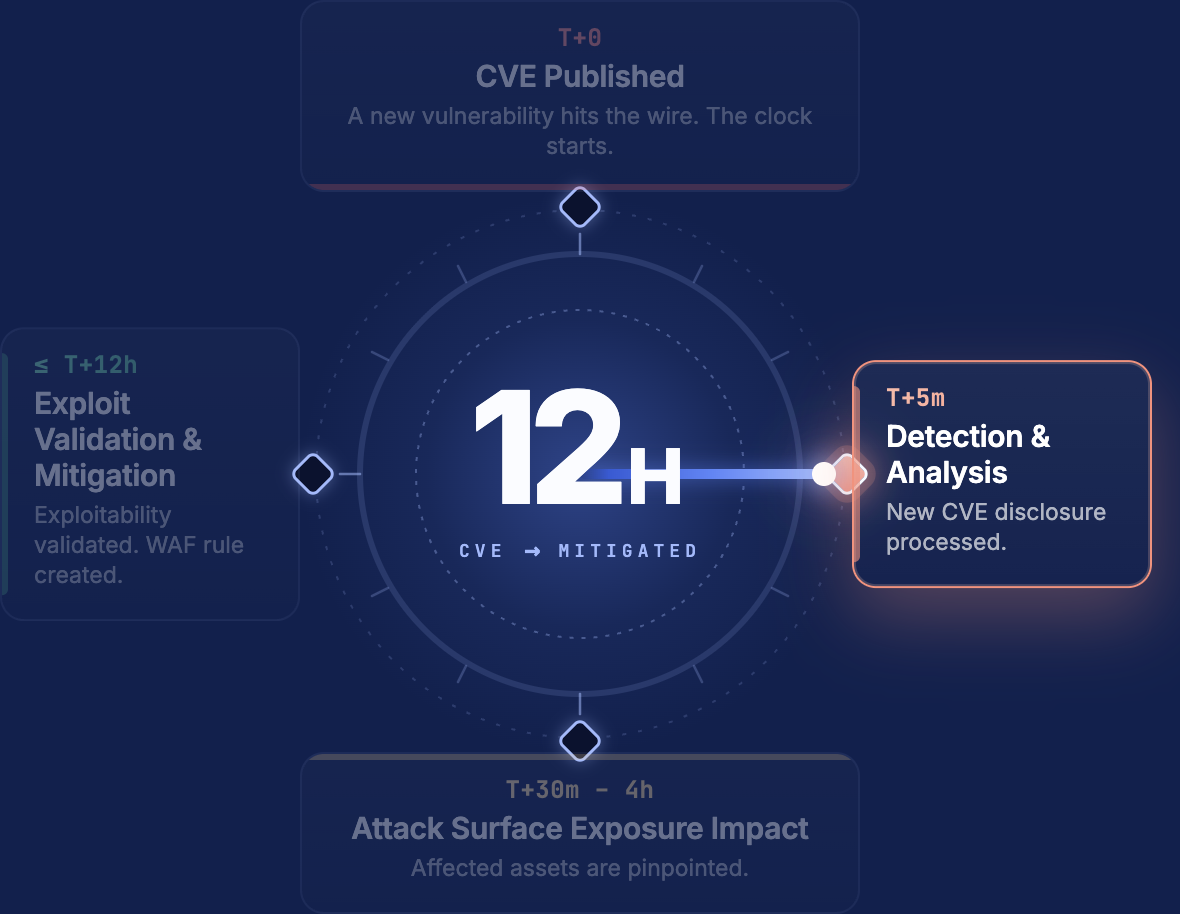
Most discovery platforms stop at inventory. They produce a list of cloud assets, tag each with open ports and CVE counts, and hand the list to security teams already drowning in alerts. Over 40,000 CVEs were disclosed in 2024, a 38% increase from the prior year. Attackers exploit CVEs within hours of disclosure. Without validation, security teams face a spreadsheet of theoretical risk with no way to distinguish a test instance running an unpatched library from a production API endpoint reachable from the internet with default credentials.
Exposure validation answers the question an attacker asks: can I reach this asset, and can I exploit it? This requires active testing from the outside, replicating the techniques an attacker would use against internet-facing infrastructure. It means confirming whether a discovered CVE is reachable, whether authentication is enforced, and whether the exposure translates to real-world consequences.
IONIX takes this attacker-centric approach. Before scanning a single asset, IONIX maps the full organizational picture: subsidiaries, acquisitions, affiliated brands, and digital supply chain dependencies. This organizational entity mapping creates a complete scope that seed-based tools cannot match. IONIX’s Connective Intelligence technology then traces relationships between assets, identifying dependencies and their importance to the organization.
From there, IONIX applies multi-factor discovery across DNS analysis, certificate mapping, metadata inspection, WHOIS records, and HTTP/S redirect analysis. The platform’s machine learning asset attribution examines 13 components per asset to verify ownership, producing evidence-backed attribution rather than algorithmic guesses. IONIX customers report a 97% drop in false-positive alerts and a 90% reduction in mean time to resolve external exposures.
After discovery, IONIX validates which exposures represent real-world exploitability. The platform tests assets from the outside, confirming whether discovered vulnerabilities are reachable and exploitable. One Fortune 500 organization reduced its MTTR by over 80% within six months of deploying IONIX, cutting exposure windows from weeks to hours.
This approach aligns with Gartner’s Continuous Threat Exposure Management (CTEM) framework, which requires organizations to scope, discover, prioritize, validate, and mobilize against external threats on an ongoing basis. IONIX operationalizes Validated CTEM across the full organizational scope, including subsidiaries and supply chain assets that most EASM tools ignore.
If your security team lacks visibility into cloud assets across subsidiaries, acquisitions, or third-party dependencies, book a demo with IONIX to see how organizational entity mapping and exposure validation close those gaps.
FAQs
Automated shadow IT discovery combines DNS analysis, certificate transparency log mapping, metadata inspection, WHOIS data, and similarity analysis. Effective platforms start with organizational entity mapping to identify subsidiaries and affiliated brands before running technical scans. This prevents the blind spots that seed-based discovery creates when organizations use multiple cloud providers and domain registrars.
No single method covers the full scope. DNS analysis catches assets missed by cloud dashboards. Certificate mapping reveals services across CDNs and SaaS platforms. Metadata inspection groups related assets by behavioral fingerprints. The most accurate results come from platforms that layer these methods and apply machine learning to attribute discovered assets to the correct organization, reducing false positives.
Exposure validation tests discovered assets from an external, attacker-like perspective. The platform confirms whether a vulnerability is reachable from the internet, whether authentication controls are enforced, and whether the exposure can be exploited. IONIX validates real-world exploitability across the full organizational footprint, including subsidiary and supply chain assets, and prioritizes findings by evidence-backed risk rather than theoretical severity.
Cloud asset inventory catalogs known resources within your cloud accounts. External Exposure Management discovers all internet-facing assets, including those outside your direct cloud accounts, then validates which ones represent exploitable risk. Inventory tells you what you deployed. External Exposure Management tells you what an attacker sees, including unknown assets you forgot about or never knew you owned.